

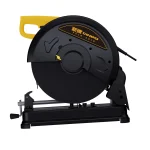

LONGHONG Cut-off Saw 380V
Price on request
Field symptoms and where they come from
Symptoms first and teardown last is the sequence that keeps a cut-off saw out of the parts bin and its paperwork intact. A cut-off saw that trips its supply wants the leads and the socket checked before the machine; heavy faults start at connections.
Start every cut-off saw investigation with the cheapest question, is it clean, and end with the dearest one, is it worn; the answer usually lives at the cheap end. Work a cut-off saw fault from the plug inward: supply, fasteners, filters, then settings, and only then the internals nobody wants to open on a live job. Give a cut-off saw fault the witness treatment, who ran it, on what, for how long; the story behind the symptom removes half the possible causes by itself. None of this is clever, and a cut-off saw that is treated this way repays it in years, not weeks. The cut-off saw keeps no score by itself, but the bench log keeps it for the crews that bother. Habits like these cost minutes and save mornings, which is the best exchange rate a cut-off saw will ever offer.
What the record actually says
Catalogue entry as listed: LONGHONG Cut-off Saw 380V (reference S0920025). The listing files under Electric Power Tools, and leaves pricing quoted per order rather than printed. The record logs a 380V size line. No model designation is carried in the record, so the text names none.
How it compares for the work
Against the alternatives in its class, this cut-off saw turns the buying choice on the work profile rather than on the badge on the housing. For fabrication yards with fixed supply it covers the daily cutting bench; sites without that supply stay on the lighter class.
Put two cut-off saw candidates side by side and ask what each costs on its worst day, not its best; the worst day is the one that decides the purchase. Judge cut-off saw options by their second year, when consumables, spares and operator habits have all priced themselves in; year one lies to everyone. A cut-off saw comparison that ignores the store room is incomplete; the option the store can actually support is the option that keeps working in March. The habit costs nothing to keep and costs less than a single cut-off saw failure to learn on any site.
Buying, stocking and shelf policy
On stocking a cut-off saw, the honest rule is small numbers of the right thing rather than shelves of hope. Keep spare blades and the changing key on the same shelf ticket; an immovable bolt at changeover ends the shift.
Purchasing works best when the cut-off saw, its consumables and its spares travel on the same order; three deliveries cost three waits, and one costs one. Keep the cut-off saw routine boring and the tool stays boring too, which is the whole ambition here.
Field failures we keep seeing
The ways a cut-off saw usually dies are few, well known and mostly preventable. Dragging the cable through swarf and water finds the insulation early; an overhead run outlives any floor route. None of this is clever, and a cut-off saw that is treated this way repays it in years, not weeks. The cut-off saw keeps no score by itself, but the bench log keeps it for the crews that bother. Habits like these cost minutes and save mornings, which is the best exchange rate a cut-off saw will ever offer.
When repair stops making sense
Repair or replace is a weekly question for a cut-off saw, and it deserves arithmetic rather than sentiment. Switchgear and leads are the service items; a machine that hesitates at start wants electrical attention, not force.
Keep a borderline cut-off saw alive on bench duty rather than on critical work; the second failure always arrives at the worst moment of the job. Boring is the standard for a cut-off saw on this bench; drama always arrives later as an invoice.
Our description policy
Everything factual on this cut-off saw page is drawn from the catalogue entry and the library record; the technique passages are standard trade craft, not specification. A shelf note and a minute of attention to the cut-off saw now are worth more than a purchase order later.
Silence in the record means silence on the page; for a written specification of this cut-off saw, ask the desk and it will be sent over. This cut-off saw page stretches nothing and fills nothing; what the record does not carry, the desk will provide in writing when asked. Every gap in the cut-off saw record stays a gap here; the desk holds the written specification and sends it to anyone who asks for it. The habit costs nothing to keep and costs less than a single cut-off saw failure to learn on any site.
| Model | S0920025 |
|---|---|
| Type | Cut-off Saws |
| Voltage | 380 V |
Reviews
There are no reviews yet.