
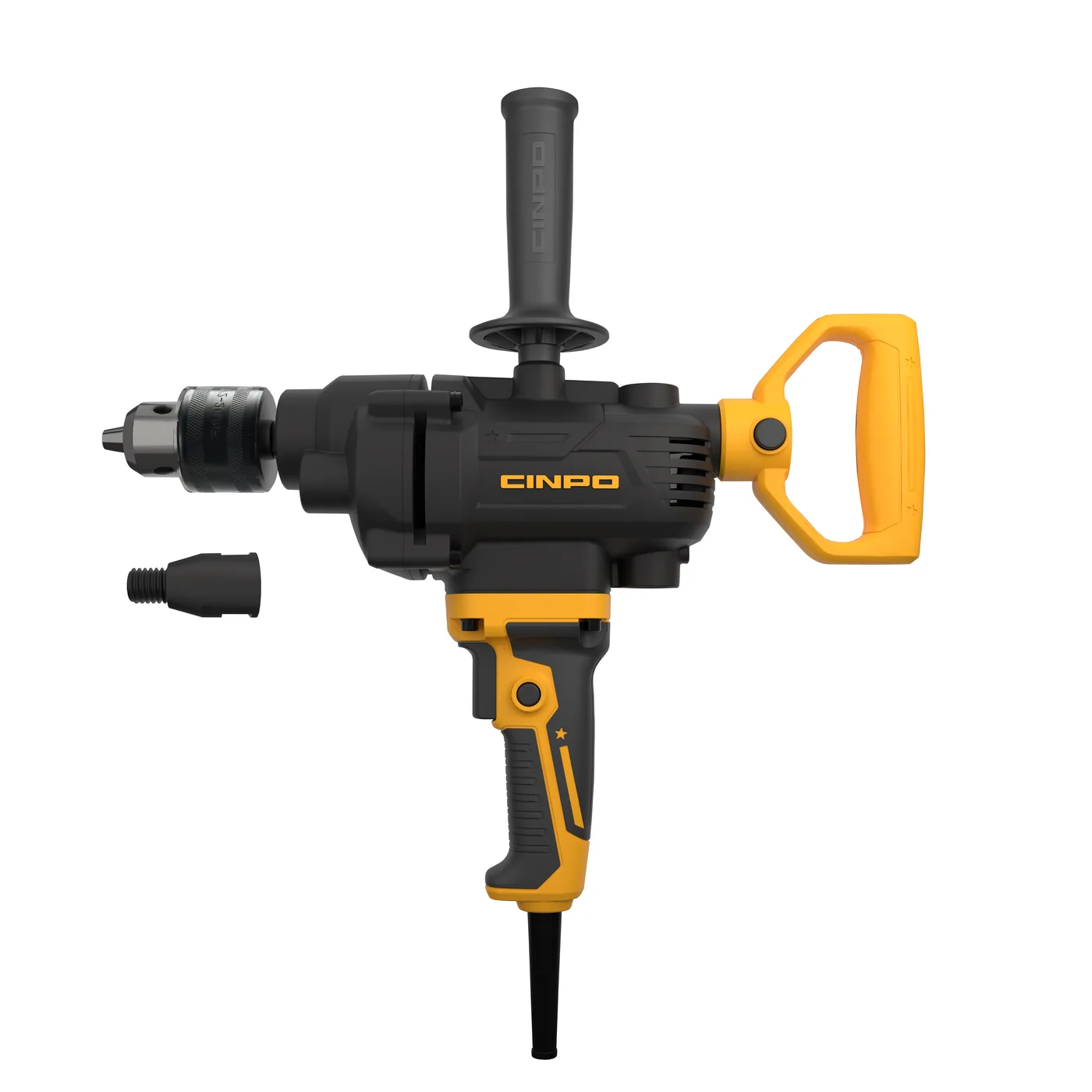
CINPO 6056B Drill
$29.99
When it misbehaves: symptoms and causes
The first report on a failing drill is almost never the fault itself; it is a symptom wearing the wrong name badge. A drill complaint usually arrives dressed as a breakdown but walks like a setting; make it show its papers before anyone reaches for tools. A chuck that will not grip small shanks cleanly has swarf in the jaws; open fully, tap out grit, retest.
Half of site faults on a drill are assembly and dirt; the other half are wear that announced itself early and was booked into a busy week instead. None of this is clever, and a drill that is treated this way repays it in years, not weeks. The drill keeps no score by itself, but the bench log keeps it for the crews that bother. Habits like these cost minutes and save mornings, which is the best exchange rate a drill will ever offer.
What the record actually says
Catalogue entry as listed: CINPO 6056B Drill (reference S0070010048). The listing files under Electric Power Tools, and carries a listed price of $29.99. No size line appears in the record, so the text invents none.
Selection notes for the buyer
Between the drill options a buyer actually has, the axes that decide are load, reach and the cost of feeding it. The compact frame suits tight corners and overhead rounds where long bodies fight the ceiling.
A sensible drill comparison weighs the tool against the diary rather than the brochure; the best spec on paper loses to the right size on the belt. The habit costs nothing to keep and costs less than a single drill failure to learn on any site.
Stock and procurement notes
The buying rule for a drill that survives contact with sites: one in the work, one in the box, and the box labelled. Store it case-down with the handle folded; a drill rattling loose in a van is a drill with a cracked housing soon.
Purchasing works best when the drill, its consumables and its spares travel on the same order; three deliveries cost three waits, and one costs one. Keep the drill routine boring and the tool stays boring too, which is the whole ambition here.
How tools of this class usually die
Ask any repair bench what kills a drill and the answer is a short list, told with more amusement than sympathy. The obituary of a drill is usually written months before the funeral, in small abuses that nobody logged at the time. A drill rarely dies of old age on a well-run site; it dies of a habit that somebody thought was a shortcut. Back-driving the chuck by hand at full torque is the classic wrist injury; use the key or the lock, not the palm. None of this is clever, and a drill that is treated this way repays it in years, not weeks. The drill keeps no score by itself, but the bench log keeps it for the crews that bother. Habits like these cost minutes and save mornings, which is the best exchange rate a drill will ever offer.
Repair, replace or retire
The fix-or-retire call on a drill is easier when the failure mode, not the mood, makes the decision. Bearings grumble before they seize; a dry growl under no load is the bench call, not a site nuisance.
Weigh a drill repair in hours as well as money; a cheap part that takes the machine out for a week is not a cheap part. Log every drill repair with its date and its parts; the second entry on the same fault is usually the signature on the replacement order. Set a drill rule in advance, such as no more than one major repair per season; rules made in advance survive the pressure of the moment. Boring is the standard for a drill on this bench; drama always arrives later as an invoice.
What we claim and what we do not
Everything factual on this drill page is drawn from the catalogue entry and the library record; the technique passages are standard trade craft, not specification. A shelf note and a minute of attention to the drill now are worth more than a purchase order later.
Anything the record does not state about this drill, the page does not invent; a written specification can be requested from the desk. The habit costs nothing to keep and costs less than a single drill failure to learn on any site.
| Model | 6056B |
|---|---|
| Type | Drills |
Reviews
There are no reviews yet.