
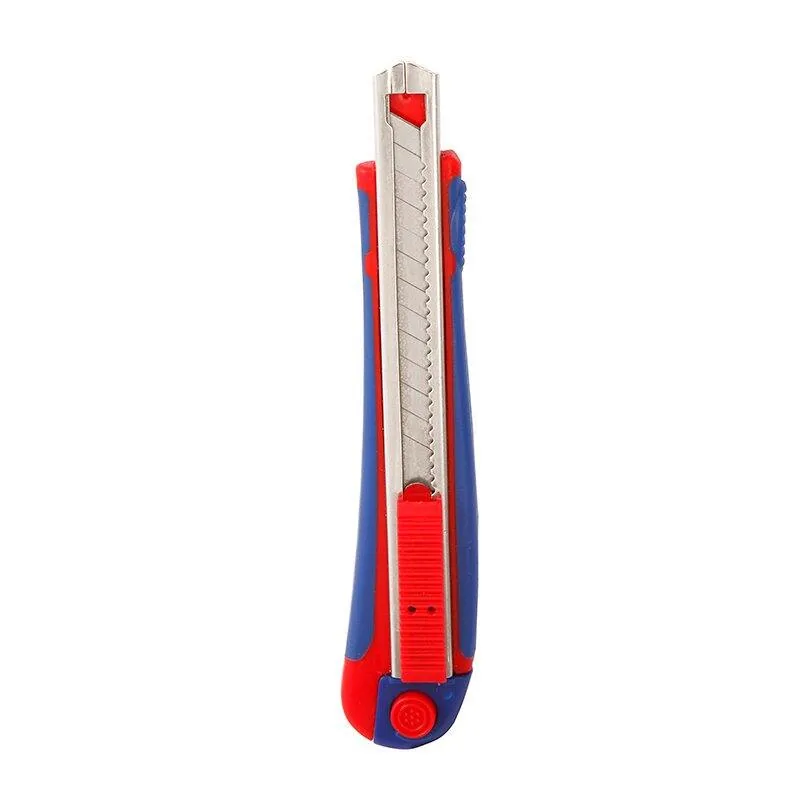
WORKPRO Utility Knife 9mm – WP212010
$1.99
Field symptoms and where they come from
Troubleshooting a utility knife begins with what changed, not with what broke; the last job tells you more than the manual does. Check the blade segments snap cleanly and the slider locks at each stop before issue; a slider that creeps under pressure turns a scoring knife into a guessing game.
Diagnose from cheapest to dearest on a utility knife: a clean, a setting and a consumable before any teardown; most returned faults live in the first three checks. Small disciplines, applied on every shift, are what keep the utility knife off the scrap bench for good.
What the record actually says
Catalogue entry as listed: WORKPRO Utility Knife 9mm (reference WP212010). The listing is filed beneath the Hand Tools banner, and carries a listed price of $1.99. The record logs a 9mm size line. There is no model number on file, and the description offers no substitute.
How it compares for the work
Selection questions about a utility knife answer best with the day’s real work on the table, not with catalogue superlatives. Keep it for cartons, film, and light scoring where a heavy knife fatigues the hand; the slim body suits a pocket, and a knife on the person is a knife that gets used safely.
Put two utility knife candidates side by side and ask what each costs on its worst day, not its best; the worst day is the one that decides the purchase. Judge utility knife options by their second year, when consumables, spares and operator habits have all priced themselves in; year one lies to everyone. A utility knife comparison that ignores the store room is incomplete; the option the store can actually support is the option that keeps working in March. None of this is clever, and a utility knife that is treated this way repays it in years, not weeks. The utility knife keeps no score by itself, but the bench log keeps it for the crews that bother. Habits like these cost minutes and save mornings, which is the best exchange rate a utility knife will ever offer.
Procurement notes for the buyer
On stocking a utility knife, the honest rule is small numbers of the right thing rather than shelves of hope. Store spares in the dispenser rather than loose in the tray; naked segments rust at the snap line first, and a rusted segment snaps crooked when it finally meets work.
Order utility knife consumables on a cadence rather than in a panic; the panic order always ships the slow way and arrives after the job has moved on. Give every utility knife on the shelf a label, a date and a place to live; unnamed stock is how duplicates breed and shortages surprise. Review utility knife stock against the jobs actually quoted for the month ahead; the diary is a better purchasing agent than any instinct is. A utility knife that quits during a check costs a pause; the same quit during a job costs a story, and nobody wants the story.
Field failures we keep seeing
Ask any repair bench what kills a utility knife and the answer is a short list, told with more amusement than sympathy. The obituary of a utility knife is usually written months before the funeral, in small abuses that nobody logged at the time. A utility knife rarely dies of old age on a well-run site; it dies of a habit that somebody thought was a shortcut. Segments that crumble rather than snap are either stale stock or over-hard; rotate old spares into light duty and keep fresh ones for the jobs that matter. None of this is clever, and a utility knife that is treated this way repays it in years, not weeks. The utility knife keeps no score by itself, but the bench log keeps it for the crews that bother. Habits like these cost minutes and save mornings, which is the best exchange rate a utility knife will ever offer.
The fix-or-replace decision
Serviceability questions about a utility knife end better when asked early, before the second failure books itself. The slider is the only moving part worth attention; a drop of light oil and a working of the track keeps the click positive, and positive clicks are how safe knives stay safe.
Retire a utility knife that fails in ways that endanger rather than inconvenience; a tool that fails safe can wait for parts, and one that fails loud cannot. A utility knife kept dull by routine is the finest thing a workshop can own, and dull here is a compliment.
What we claim and what we do not
Everything factual on this utility knife page is drawn from the catalogue entry and the library record; the technique passages are standard trade craft, not specification. A utility knife that quits during a check costs a pause; the same quit during a job costs a story, and nobody wants the story.
Silence in the record means silence on the page; for a written specification of this utility knife, ask the desk and it will be sent over. This utility knife page stretches nothing and fills nothing; what the record does not carry, the desk will provide in writing when asked. Every gap in the utility knife record stays a gap here; the desk holds the written specification and sends it to anyone who asks for it. None of this is clever, and a utility knife that is treated this way repays it in years, not weeks. The utility knife keeps no score by itself, but the bench log keeps it for the crews that bother. Habits like these cost minutes and save mornings, which is the best exchange rate a utility knife will ever offer.
| Model | WP212010 |
|---|---|
| Type | Utility Knives |
| Width | 9 mm |
Related products
Reviews
There are no reviews yet.