

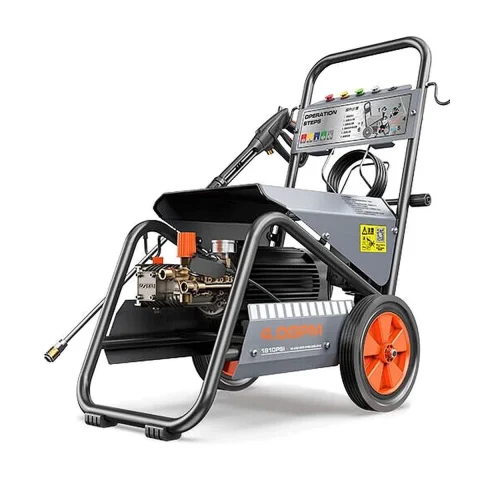
LUTIAN SHARP-S8 Pressure Washer
Price on request
Cleaning power is pressure times flow, not pressure
A pressure washer is sold on its bar rating because bar is the number that fits on a box. What removes dirt is the product of pressure and flow: a narrow jet at high pressure and a wide jet at low pressure can deliver similar cleaning work, and the difference is how the energy is delivered to the surface rather than how much there is.
That is why two machines quoting the same pressure can clean very differently. The one with more flow rinses faster and covers more area; the one with more pressure and less flow cuts better into a single stubborn patch and is slower over a driveway.
Bar, litres per minute and the honest comparison
Pressure is quoted as a maximum, usually at the pump outlet with the trigger released. Flow is quoted at a stated pressure, and the two figures must be read together or neither means anything. A machine rated at a high pressure with a low flow will not rinse a large area quickly, however impressive the number looks.
Working pressure is lower than maximum pressure, and the drop is larger on machines with a long hose or a small nozzle. Ask for the working figures, not the peak ones, and the comparison becomes real.
What our registry holds for this entry
The model SHARP-S8 and the price is quoted per order. No pressure rating, no flow figure, no motor power, no hose length, no weight. We state the gap rather than fill it, because on a pressure washer the two missing numbers are the entire specification.
Everything below describes the class and the questions that close the gap. It is useful for choosing between machines; it is not a claim about this one’s ratings.
Pump type: axial, wobble plate and triplex
Axial pumps are cheap, light and short-lived, and they suit occasional domestic use. Wobble-plate pumps sit in the middle, with better life and a moderate price. Triplex plunger pumps are the professional answer: rebuildable, tolerant of continuous duty and considerably more expensive.
Pump type is the honest indicator of intended duty. A machine with an axial pump sold for weekly car washing is correctly built; the same pump sold for daily commercial use is a maintenance cost waiting to happen, and no pressure rating disguises that.
Where a machine of this class earns its place
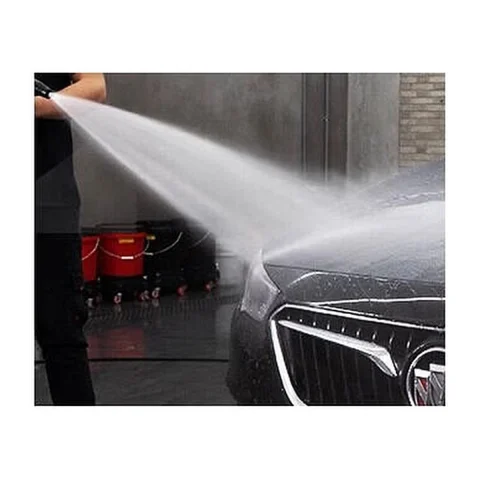
Vehicle washing, patio and deck cleaning, garden furniture, bins, and the general outdoor cleaning around a property. It also suits light trade use where the machine runs for short periods and is put away dry.
It does not suit continuous commercial operation, sandblasting attachments, or drain cleaning, each of which needs a machine built for sustained pressure and a pump that can be serviced.
Water supply, air locks and the inlet filter
Most machines in this class run from a mains supply or a tank, and the inlet is the most common cause of poor performance. A clogged inlet filter starves the pump, which shows as pulsing pressure and a machine that seems to lose power as it warms up.
Running dry is worse than running below pressure. A pump that draws air loses lubrication and overheats within seconds, and the damage is not recoverable by topping up the tank. Prime the inlet before starting, every time.
What to confirm before ordering
Ask for working pressure and flow at that pressure, pump type, motor power and supply, hose length and diameter, nozzle type, weight and whether a detergent injector is fitted. Ask also whether the pump is serviceable and whether spare seals are available.
Tell us what is being cleaned and how often. A driveway twice a year and a van fleet every week are different purchases, and the answer decides which of the two numbers matters more.
| Model | SHARP-S8 |
|---|---|
| Type | Pressure Washers |
Reviews
There are no reviews yet.