
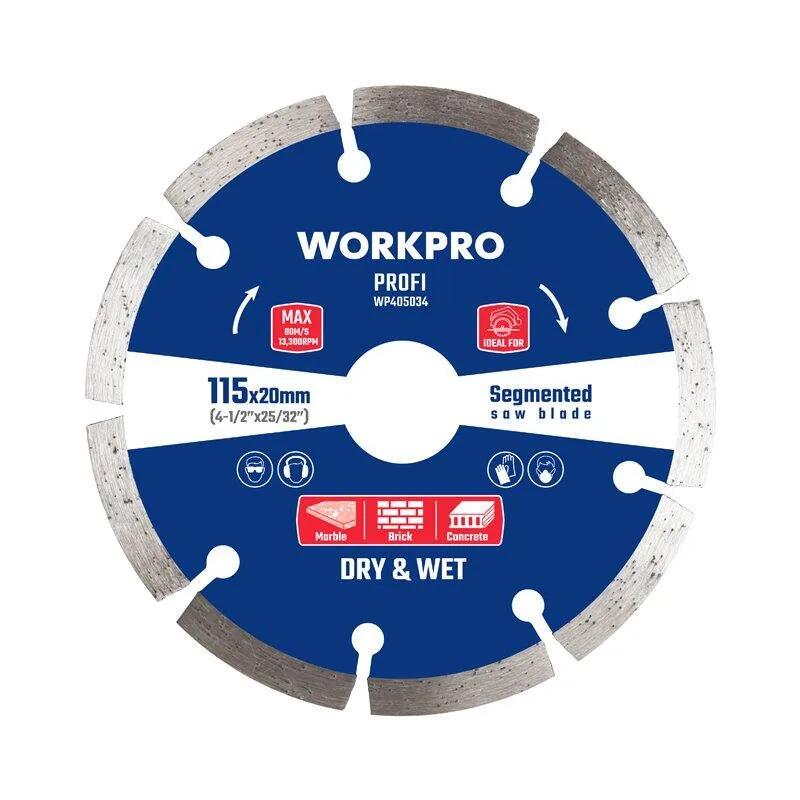
WORKPRO Saw Blade 115x20x10mm
$3.99
Troubleshooting: first symptoms and likely causes
Troubleshooting a saw blade begins with what changed, not with what broke; the last job tells you more than the manual does. A blade that burns the cut is loaded resin or a dull plate; clean the gullets before blaming the machine.
Diagnose from cheapest to dearest on a saw blade: a clean, a setting and a consumable before any teardown; most returned faults live in the first three checks. None of this is clever, and a saw blade that is treated this way repays it in years, not weeks. The saw blade keeps no score by itself, but the bench log keeps it for the crews that bother. Habits like these cost minutes and save mornings, which is the best exchange rate a saw blade will ever offer.
The catalogue facts
Catalogue entry as listed: WORKPRO Saw Blade 115x20x10mm (reference WP405034). The listing files under Accessories & Consumables, and attaches the listed price of $3.99 to the offer. The record logs a 115x20x10mm size line. No model designation is carried in the record, so the text names none.
How it compares for the work
Selection questions about a saw blade answer best with the day’s real work on the table, not with catalogue superlatives. Match the plate to the machine class before the material; the bore and guard tell you what fits, the teeth tell you what cuts.
When two saw blade options both serve, choose the one whose consumables and spares the store already carries; familiarity is a feature no datasheet lists. The habit costs nothing to keep and costs less than a single saw blade failure to learn on any site.
Procurement notes for the buyer
Stocking a saw blade well means admitting what fails often, and stocking a saw blade badly means guessing; the failure log settles which one happened. A saw blade on the shelf is a decision made calmly; a saw blade ordered in a hurry is the same decision with a surcharge attached. The saw blade shelf policy that works is written down, dated and boring; heroics belong on the job, not in the store room. Store blades flat and separated; edges touching in a box chew each other before the work does.
A shelf policy that labels, dates and rotates saw blade stock beats a larger budget; the cheapest tool is the one already on the shelf when the job calls. Keep the saw blade routine boring and the tool stays boring too, which is the whole ambition here.
How tools of this class usually die
The ways a saw blade usually dies are few, well known and mostly preventable. Cutting nail-hidden timber without inspection chips teeth in one pass; a scan costs seconds and saves the plate. None of this is clever, and a saw blade that is treated this way repays it in years, not weeks. The saw blade keeps no score by itself, but the bench log keeps it for the crews that bother. Habits like these cost minutes and save mornings, which is the best exchange rate a saw blade will ever offer.
Repair, replace or retire
Serviceability questions about a saw blade end better when asked early, before the second failure books itself. Teeth are the consumable and the honest horizon; retire at the first torn tip rather than at the burn it leaves.
Retire a saw blade that fails in ways that endanger rather than inconvenience; a tool that fails safe can wait for parts, and one that fails loud cannot. Boring is the standard for a saw blade on this bench; drama always arrives later as an invoice.
Our description policy
Brand, reference, category and the price line for this saw blade all come from the catalogue record; the craft notes are ordinary trade practice any operator can check. A shelf note and a minute of attention to the saw blade now are worth more than a purchase order later.
This page claims no figure for the saw blade that the record does not carry; specifications in writing are available from the desk. The habit costs nothing to keep and costs less than a single saw blade failure to learn on any site.
| Model | WP405034 |
|---|---|
| Type | Saw Blades |
| Size | 115x20x10mm |
Reviews
There are no reviews yet.