
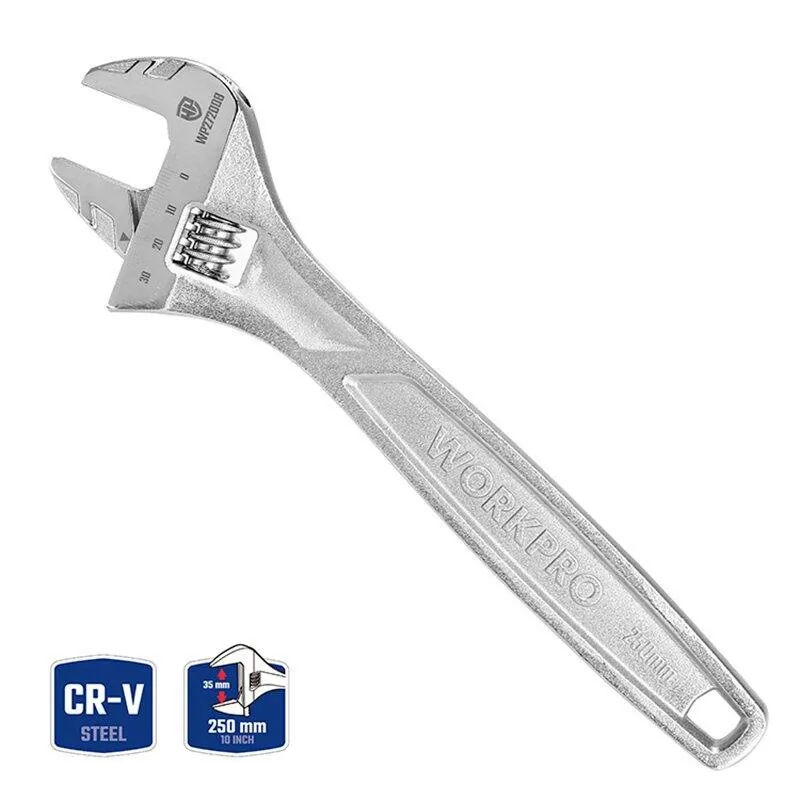
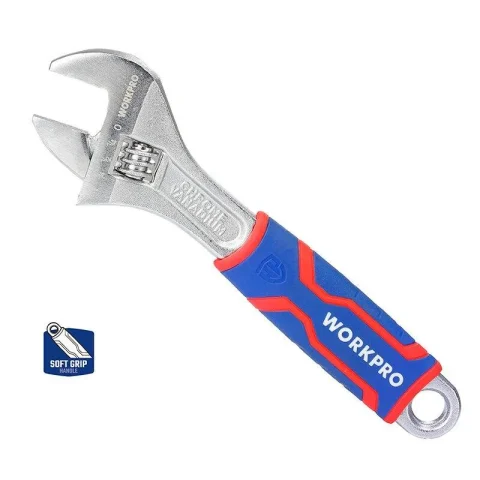
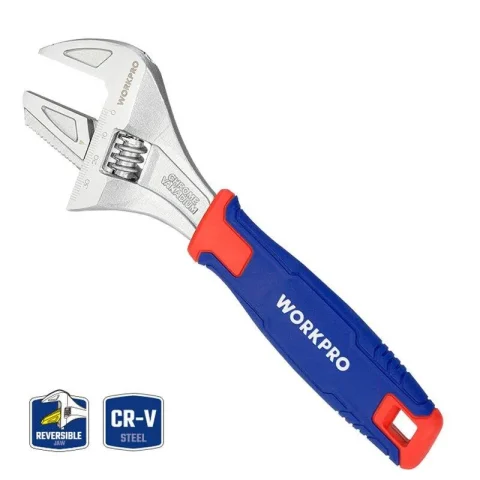
WORKPRO Wrench 10in
$6.99
When it misbehaves: symptoms and causes
Troubleshooting a wrench begins with what changed, not with what broke; the last job tells you more than the manual does. A wrench that slips under a pull usually has the worm screw worn, not a nut beyond saving.
Half of site faults on a wrench are assembly and dirt; the other half are wear that announced itself early and was booked into a busy week instead. A labeled case keeps the wrench out of the lost tool drawer and off the reorder list.
What the record actually says
Catalogue entry as listed: WORKPRO Wrench 10in (reference WP272008). The Wrenches section of the record carries it, and prices the listing at $6.99. The record logs a 10in size line. No model designation is on file, and the page does not supply one.
Selection notes for the buyer
Comparing wrench options honestly starts with the jobs they will actually see this quarter, not with the ones they could theoretically do. The right wrench for a crew shows up in the work diary long before it shows up in a datasheet; read the diary first and shop second. Among the wrench choices open to a buyer, the differences that matter repeat daily, and the differences that impress appear once a year at best. The adjustable for the fitter who meets unfamiliar fasteners and would rather carry one tool than a roll.
When two wrench options both serve, choose the one whose consumables and spares the store already carries; familiarity is a feature no datasheet lists. Photograph the wrench serial plate on day one; warranty conversations go faster forever.
Procurement notes for the buyer
Procurement planning for a wrench starts from the failures: stock the parts that stop jobs, not the parts that decorate shelves. Back the jaw off before it goes in the bag, because a wrench stored tight takes a set in the slide.
Order wrench consumables on a cadence rather than in a panic; the panic order always ships the slow way and arrives after the job has moved on. Give every wrench on the shelf a label, a date and a place to live; unnamed stock is how duplicates breed and shortages surprise. Review wrench stock against the jobs actually quoted for the month ahead; the diary is a better purchasing agent than any instinct is. A wrench dropped from height deserves an inspection even when it looks fine.
How tools of this class usually die
Ask any repair bench what kills a wrench and the answer is a short list, told with more amusement than sympathy. The obituary of a wrench is usually written months before the funeral, in small abuses that nobody logged at the time. A wrench rarely dies of old age on a well-run site; it dies of a habit that somebody thought was a shortcut. Most returns trace to a jaw that rocks in the slide, which is the knurl worn smooth. Any wrench modification, however small, belongs in the log next to its purchase date.
When repair stops making sense
Repair or replace is a weekly question for a wrench, and it deserves arithmetic rather than sentiment. The worm and the slide are the wear points, and a wrench that still holds its setting is worth keeping.
Retire a wrench that fails in ways that endanger rather than inconvenience; a tool that fails safe can wait for parts, and one that fails loud cannot. Track wrench runtime with the same seriousness as fuel, and the budget stops arguing.
What we claim and what we do not
Brand, reference, category and the price line for this wrench all come from the catalogue record; the craft notes are ordinary trade practice any operator can check. The least costly hour on any job is the one spent checking a wrench before it is needed.
This page claims no figure for the wrench that the record does not carry; specifications in writing are available from the desk. Photograph the wrench serial plate on day one; warranty conversations go faster forever.
| Model | WP272008 |
|---|---|
| Type | Wrenches |
| Length | 10 in |
Related products
Reviews
There are no reviews yet.