
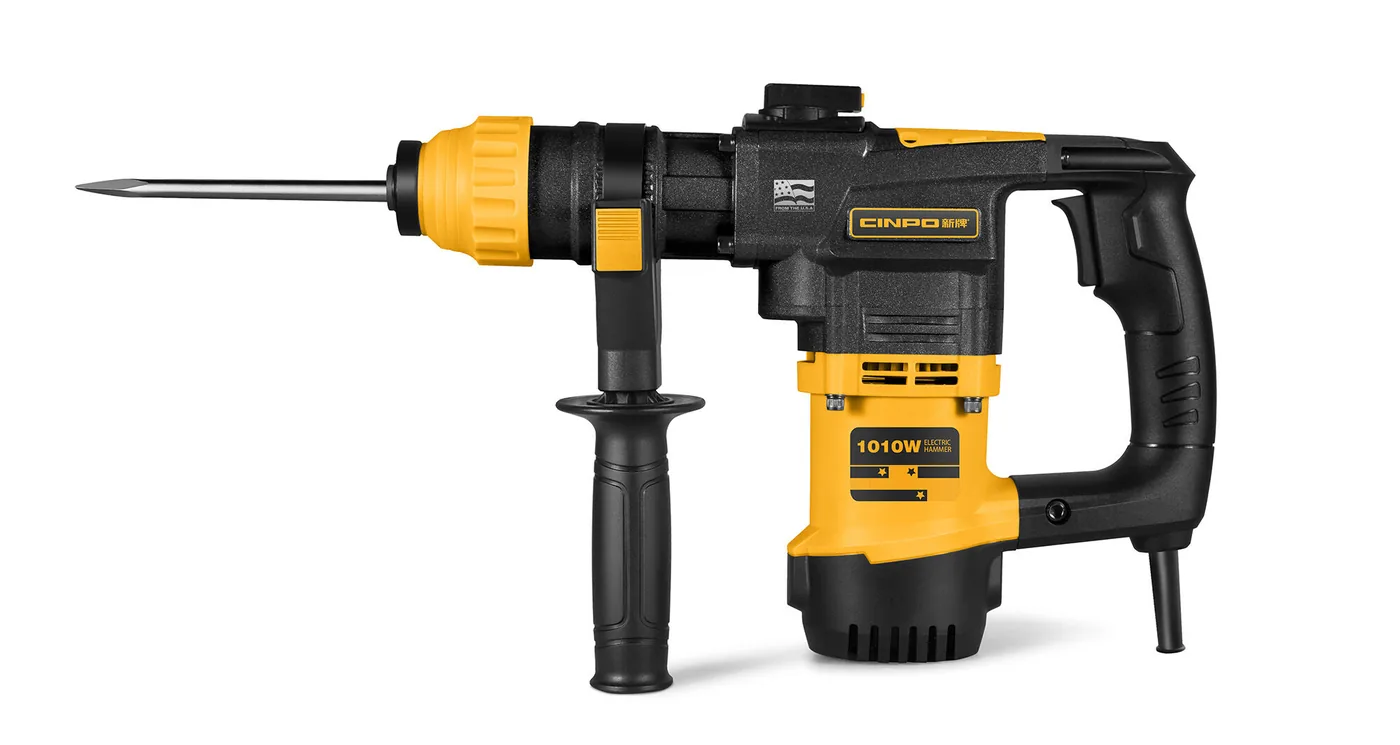
CINPO 8268 Rotary Hammer
$31.99
Troubleshooting: first symptoms and likely causes
Symptoms first and teardown last is the sequence that keeps a rotary hammer out of the parts bin and its paperwork intact. A hammer that drills but will not strike has lost its grease at the piston, and topping up is a short job rather than a strip-down.
Half of site faults on a rotary hammer are assembly and dirt; the other half are wear that announced itself early and was booked into a busy week instead. Humidity, not misuse, ends more stored rotary hammer lives than any jobsite ever will.
The catalogue facts
Catalogue entry as listed: CINPO 8268 Rotary Hammer (reference S0070010054). The catalogue lists it under Electric Power Tools, and carries a listed price of $31.99. No size is given by the record, and no size is given below.
Choosing between the alternatives
Against the alternatives in its class, this rotary hammer turns the buying choice on the work profile rather than on the badge on the housing. Picked where the drilling is anchors and rawl plugs and the tool spends as much time in a bag as in a hand.
A sensible rotary hammer comparison weighs the tool against the diary rather than the brochure; the best spec on paper loses to the right size on the belt. The five minutes spent greasing a rotary hammer fitting return months of bearing life.
Stock and procurement notes
The buying rule for a rotary hammer that survives contact with sites: one in the work, one in the box, and the box labelled. Keep it upright in the case so the grease sits where it is needed; nose-down storage seeps oil past the seals.
Buy rotary hammer capacity against the work actually scheduled rather than the work imagined; stock that turns is an asset, and stock that waits is a price tag. When a rotary hammer starts drifting from spec, retire it to light duty instead of the bin.
The misuses that shorten its life
Failure reports for a rotary hammer repeat themselves across sites with remarkable discipline. The complaint is a hammer that fades after a long run, which points at grease rather than at the windings. One shelf, one rotary hammer, one label: the whole storage system in nine words.
When repair stops making sense
The fix-or-retire call on a rotary hammer is easier when the failure mode, not the mood, makes the decision. Grease, brushes and the chuck sleeve do the wearing, and the gearbox is what makes the tool worth keeping.
Keep a borderline rotary hammer alive on bench duty rather than on critical work; the second failure always arrives at the worst moment of the job. A rotary hammer checklist taped inside the lid gets used; one in a binder does not.
What we claim and what we do not
The catalogue record supplies every factual claim on this rotary hammer page, brand and reference and category alike; the rest is trade craft, clearly labelled as such. Two sources meet on this rotary hammer page: the catalogue entry for the facts, and ordinary workshop practice for the advice; neither pretends to be the other. Nothing on this rotary hammer page is invented; the factual half comes from the record, and the craft half is what any journeyman would tell you across the bench. The reorder point for a rotary hammer should live on the shelf, not in someone’s memory.
Anything the record does not state about this rotary hammer, the page does not invent; a written specification can be requested from the desk. The five minutes spent greasing a rotary hammer fitting return months of bearing life.
| Model | 8268 |
|---|---|
| Type | Rotary Hammers |
Related products
Reviews
There are no reviews yet.