
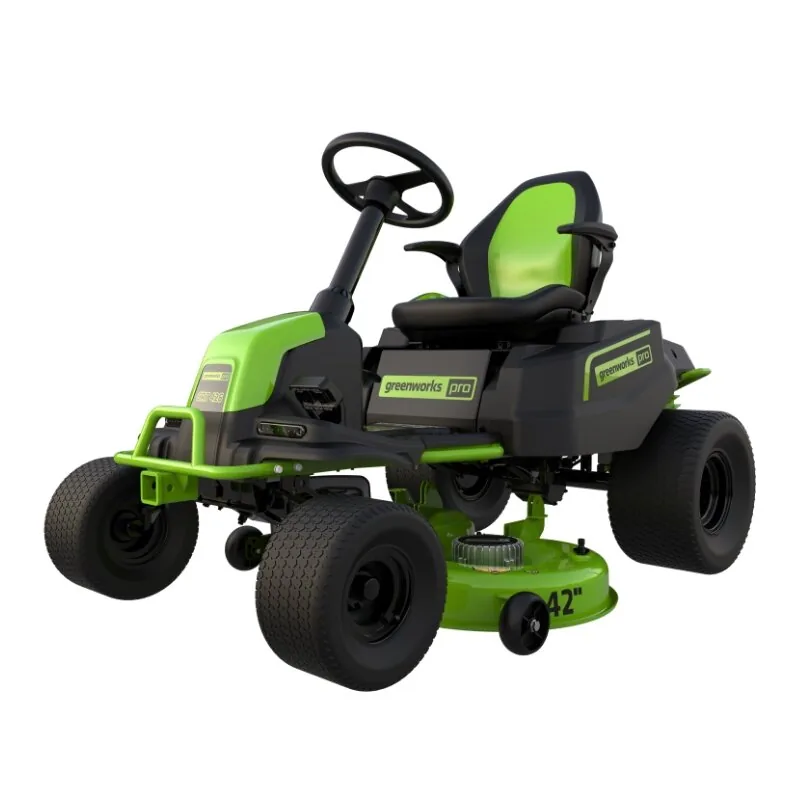
GREENWORKS Ride-on Mower Bare Tool 82V – 7409202TC
$7,360.99
Field symptoms and where they come from
Troubleshooting a ride-on mower begins with what changed, not with what broke; the last job tells you more than the manual does. A mower that fades on slopes wants its blades and deck cleaned before the drive is blamed; wet grass loads everything.
Diagnose from cheapest to dearest on a ride-on mower: a clean, a setting and a consumable before any teardown; most returned faults live in the first three checks. None of this is clever, and a ride-on mower that is treated this way repays it in years, not weeks. The ride-on mower keeps no score by itself, but the bench log keeps it for the crews that bother. Habits like these cost minutes and save mornings, which is the best exchange rate a ride-on mower will ever offer.
What the record actually says
Catalogue entry as listed: GREENWORKS Ride-on Mower Bare Tool 82V (reference 7409202TC). The listing files under Garden Tools, and attaches the listed price of $7360.99 to the offer. The record logs a 82V size line. No model designation is carried in the record, so the text names none.
Choosing between the alternatives
Against the alternatives in its class, this ride-on mower turns the buying choice on the work profile rather than on the badge on the housing. The bare route suits fleets extending an existing line; first-time buyers should cost the complete machine once.
A sensible ride-on mower comparison weighs the tool against the diary rather than the brochure; the best spec on paper loses to the right size on the belt. The habit costs nothing to keep and costs less than a single ride-on mower failure to learn on any site.
Buying, stocking and shelf policy
Procurement planning for a ride-on mower starts from the failures: stock the parts that stop jobs, not the parts that decorate shelves. Park it on a level slab with the pack off in storage; a mower is the one machine the shed must make room for.
Buy ride-on mower capacity against the work actually scheduled rather than the work imagined; stock that turns is an asset, and stock that waits is a price tag. Keep the ride-on mower routine boring and the tool stays boring too, which is the whole ambition here.
Field failures we keep seeing
The ways a ride-on mower usually dies are few, well known and mostly preventable. Scalping on kerb edges bends blades and shakes spindles; raise the deck and do the edges on foot. None of this is clever, and a ride-on mower that is treated this way repays it in years, not weeks. The ride-on mower keeps no score by itself, but the bench log keeps it for the crews that bother. Habits like these cost minutes and save mornings, which is the best exchange rate a ride-on mower will ever offer.
When repair stops making sense
Serviceability questions about a ride-on mower end better when asked early, before the second failure books itself. Blade balance after every strike is the whole discipline; a shunted spindle announces itself as a new vibration.
Retire a ride-on mower that fails in ways that endanger rather than inconvenience; a tool that fails safe can wait for parts, and one that fails loud cannot. Boring is the standard for a ride-on mower on this bench; drama always arrives later as an invoice.
Our description policy
Brand, reference, category and the price line for this ride-on mower all come from the catalogue record; the craft notes are ordinary trade practice any operator can check. A shelf note and a minute of attention to the ride-on mower now are worth more than a purchase order later.
Anything the record does not state about this ride-on mower, the page does not invent; a written specification can be requested from the desk. The habit costs nothing to keep and costs less than a single ride-on mower failure to learn on any site.
| Model | 7409202TC |
|---|---|
| Type | Ride-on Mowers |
| Voltage | 82 V |

Reviews
There are no reviews yet.