
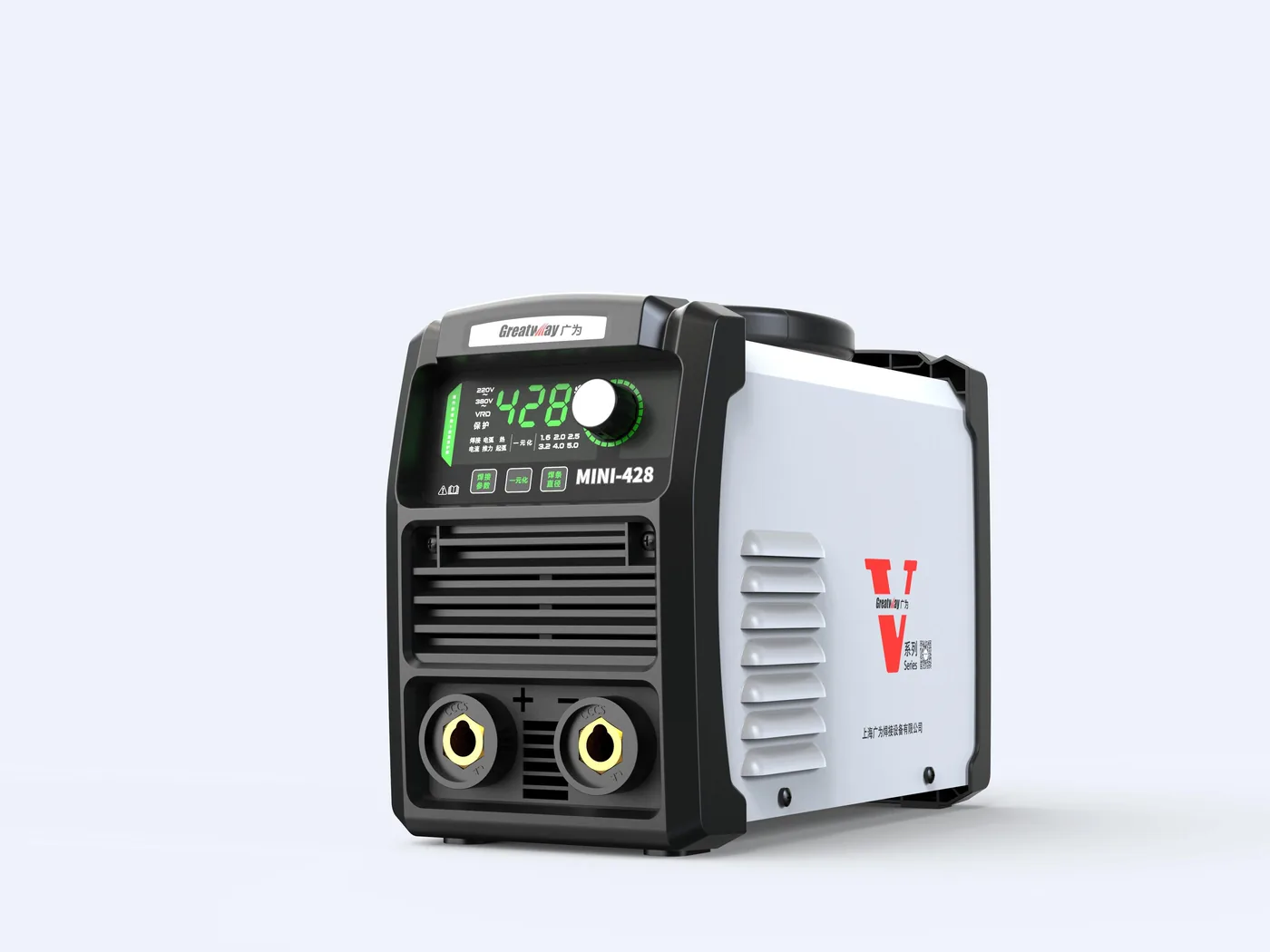
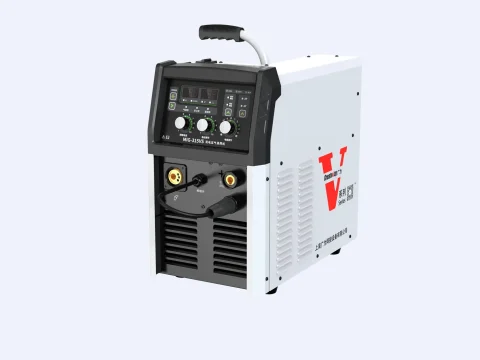
GUANGWEI MINI-428 Stick Welder
$81.99
Overview
Welding machines are sold by their maximum output and judged on their thermal behaviour. The maximum is what the marketing sheet quotes and it is available for a short burst; the figure that governs a working day is how long the machine will sustain a given current before its protection operates, and how long it then needs to recover. A buyer who welds in short bursts will never notice the difference between two machines; a buyer who fabricates will notice it within an hour.
Catalogue entry as listed: GUANGWEI MINI-428 Stick Welder (reference MINI-428). The output range and the duty cycle are not on the record, so both are confirmation items, and the notes below describe the thermal and supply behaviour that applies across this class.
Materials and construction
A transformer machine carries a laminated core and copper or aluminium windings, which is why it is heavy and why it tolerates a poor supply. An inverter machine rectifies the mains, switches it at high frequency through semiconductor devices and transforms at a much smaller core, which is why it is light and why it is more sensitive to voltage dips and to dirty supplies. Both have a fan and a thermal switch on the main heat source, and both rely on airflow through louvres that clog with grinding dust.
The output circuit is a separate system: cable, a holder, an earth clamp and the connections between them. A loose dinse connector or a clamp biting into paint raises resistance, and resistance at the output turns welding current into heat at the wrong place, which feels like a machine fault and is not one.
How to select the right size and variant
Size on the rod, not on the plate. The electrode diameter the work needs sets the current, and the current sets the duty cycle at that point on the machine’s curve. A machine that will run a small rod continuously may only manage short bursts on a large one. Then look at the supply: a domestic circuit, a workshop circuit and a generator are three different worlds, and a machine that trips a breaker is not faulty, it is mismatched.
Extension leads deserve their own decision. A long thin lead drops voltage under load, and an inverter machine will cut out or weld badly at the far end of one. A short lead of adequate cross-section costs less than the diagnosis of a fault that does not exist.
Typical applications
Fabrication shops running beads for most of a shift. Site welding on structural connections where the machine is moved between floors. Repair work in yards where the supply is taken from a socket that also feeds other equipment. Training workshops, where the machine is run by learners who will test its protection repeatedly. Maintenance departments that weld intermittently but at high current when they do.
Standards and acceptance checks
Run a thermal test on arrival rather than trusting the sheet. Set the current you intend to use, run continuous beads on scrap, and time how long the machine works before the protection operates; then time the recovery. Compare that behaviour with the duty cycle figure the supplier quoted, at the same ambient temperature, because a figure quoted at a cool workshop does not hold on a summer site.
Then check the output circuit: cables, lugs and clamp. A clamp that will not bite clean metal will cause the operator to turn the current up, which pushes the machine toward its limit for no reason. The electrical safety points are the ones that matter most with this class: an earth connection that is actually connected, an isolated supply before any cable is changed, and no welding on a structure that is being worked on by somebody else without a permit.
Packing, quantity and shipping
Machines ship in a carton with foam corners, a holder, a clamp, a hammer and a brush. Transformer units are heavy enough that the carton needs a double-wall construction and a base that can be palletised without crushing. Confirm the cable lengths, since export versions are sometimes shortened, and confirm whether the plug is fitted or supplied loose for the destination market.
What to confirm before ordering
Confirm the supply voltage and phase, the plug type, the output range, and the duty cycle at the current the buyer will actually use, with the ambient temperature stated. Confirm the thermal protection behaviour and recovery time, the cable lengths and cross-sections, and the accessories included. Confirm the cooling arrangement, the weight, the manual language, and the carton marking.
| Model | MINI-428 |
|---|---|
| Type | Stick Welders |
Related products
Reviews
There are no reviews yet.