
GUANGWEI Stick Welder
$45.99
What a stick welder can and cannot do well
Stick welding, or shielded metal arc welding, strikes an arc between a flux-coated electrode and the work. The flux burns to produce a shielding gas and a slag layer, which protects the cooling weld without any external gas supply. That self-sufficiency is why the process survives on sites where a gas bottle would be an inconvenience.
The trade is that the process is slow, produces slag that must be chipped, and demands more operator skill than wire-feed processes for the same appearance. For repair work in the field, on dirty or rusty steel, it remains the most forgiving process available.
Duty cycle: the number that decides the machine’s real size
Welding machines are rated at a duty cycle expressed over a ten-minute period, typically at a stated ambient temperature. A machine rated at sixty percent can weld for six minutes and must rest for four. That rating is given at a specific current, and it falls as current rises: a unit comfortable at one current may be at its limit at another.
This is where cheap machines are most often overstated. A high maximum current quoted without a duty cycle is a number the machine can reach briefly, not a number it can hold. For production work the duty cycle at the working current is the only figure that matters.
Open circuit voltage and electrode size
The machine must strike and hold an arc across a gap, which requires an open circuit voltage above the arc voltage, balanced against safety. The current range then determines which electrode diameters can be run: a small electrode needs less current, a large one needs more, and the machine’s top end decides how large an electrode can be used at all.
Where a machine’s maximum current is below the requirement for the electrode in hand, the electrode will stick rather than run. That is a machine limitation presenting as an operator problem, and it is a common source of frustration with small units.
What our registry holds for this entry
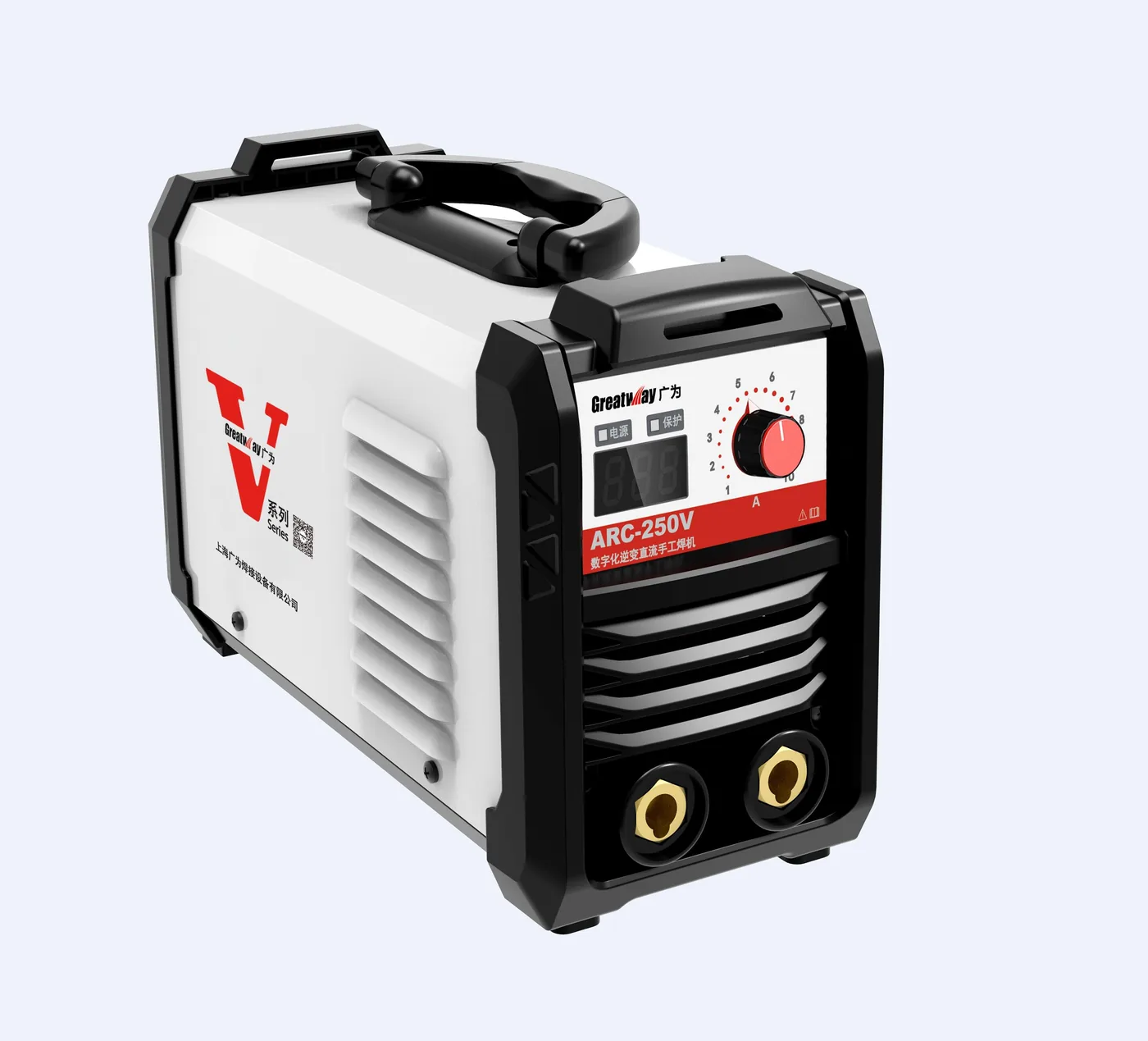
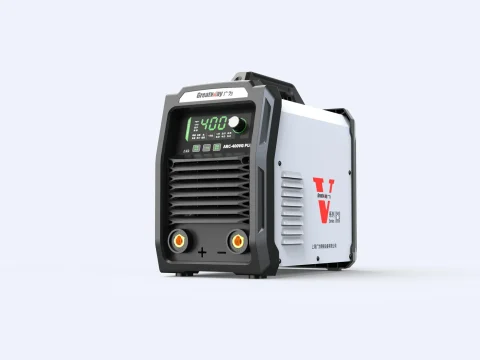
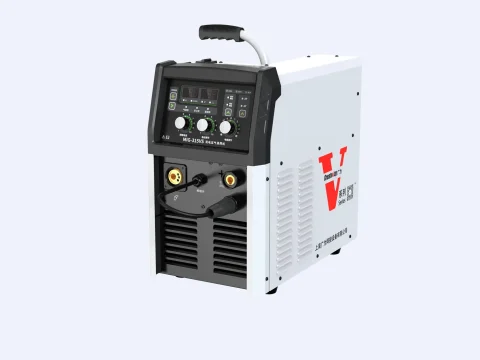
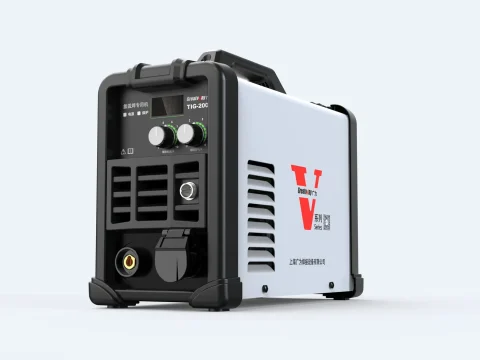
The SKU and the price on this page, and no welding specification: no current range, no duty cycle, no open circuit voltage, no input supply, no weight. We state the gap rather than infer a capability from the price or from a photograph of the case.
On a welder that gap is the entire purchase. Buyers should obtain the current range, the duty cycle at a stated current, and the input voltage and current before ordering, because those three decide what the machine can be used for.
Input supply: single phase against three phase
A single-phase machine of this class runs from a domestic supply and is limited by the current that supply can deliver. A three-phase machine draws less current per phase for the same output but requires a three-phase supply and a suitable circuit.
Where a machine is to be used on site from a generator, the generator’s continuous rating matters more than its peak, and inverter-based welders are generally kinder to generators than transformer machines of similar output.
Electrodes, storage and the faults they cause
Electrodes absorb moisture through their coating, and damp electrodes produce porosity, unstable arcs and spatter. Storage in a sealed container with a desiccant, or in a heated quiver for the day’s use, prevents the majority of weld defects that get blamed on technique.
Electrode type is matched to the steel, not to the machine. Using a general-purpose electrode on stainless produces a joint that corrodes at the weld line, and no amount of operator skill compensates for the wrong consumable.
What to confirm before buying
Current range, duty cycle at a stated current and ambient temperature, open circuit voltage, input voltage and current, electrode diameter range, cooling type, weight, and whether the machine is inverter or transformer based. Ask for the duty cycle at the current you intend to weld at, not at the maximum.
Tell us the steel thickness and the supply available. Those two answers decide the machine, and they decide it before a single bead is laid.
| Model | A0490020 |
|---|
Related products
Reviews
There are no reviews yet.