

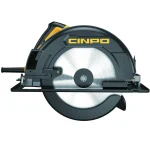

JUDAR JD190-1 Circular Saw
Price on request
When it misbehaves: symptoms and causes
Symptoms first and teardown last is the sequence that keeps a circular saw out of the parts bin and its paperwork intact. A cut that burns the edge is a dull plate or a rushed feed; fresh teeth on a clean flange settle most of it.
Start every circular saw investigation with the cheapest question, is it clean, and end with the dearest one, is it worn; the answer usually lives at the cheap end. Work a circular saw fault from the plug inward: supply, fasteners, filters, then settings, and only then the internals nobody wants to open on a live job. Give a circular saw fault the witness treatment, who ran it, on what, for how long; the story behind the symptom removes half the possible causes by itself. None of this is clever, and a circular saw that is treated this way repays it in years, not weeks. The circular saw keeps no score by itself, but the bench log keeps it for the crews that bother. Habits like these cost minutes and save mornings, which is the best exchange rate a circular saw will ever offer.
What the record actually says
Catalogue entry as listed: JUDAR JD190-1 Circular Saw (reference S0130009). The listing files under Electric Power Tools, and leaves pricing quoted per order rather than printed. No size line appears in the record, so the text invents none.
Selection notes for the buyer
Selection questions about a circular saw answer best with the day’s real work on the table, not with catalogue superlatives. For fit-out crews on a quoted basis it covers the daily sheet and stud duty without the full-site machine’s weight.
Compare circular saw candidates on the axes the job actually loads: duty cycle, reach, weight in the hand and the price of keeping them fed. The habit costs nothing to keep and costs less than a single circular saw failure to learn on any site.
Stock and procurement notes
Stocking a circular saw well means admitting what fails often, and stocking a circular saw badly means guessing; the failure log settles which one happened. A circular saw on the shelf is a decision made calmly; a circular saw ordered in a hurry is the same decision with a surcharge attached. The circular saw shelf policy that works is written down, dated and boring; heroics belong on the job, not in the store room. Keep spare plates boxed flat beside the saw; a warped spare is a discovery best made before the job, not during.
A shelf policy that labels, dates and rotates circular saw stock beats a larger budget; the cheapest tool is the one already on the shelf when the job calls. Keep the circular saw routine boring and the tool stays boring too, which is the whole ambition here.
How tools of this class usually die
Ask any repair bench what kills a circular saw and the answer is a short list, told with more amusement than sympathy. The obituary of a circular saw is usually written months before the funeral, in small abuses that nobody logged at the time. A circular saw rarely dies of old age on a well-run site; it dies of a habit that somebody thought was a shortcut. Cutting nail-hidden timber without inspection chips teeth in one pass; a stud scan costs seconds and saves a plate. None of this is clever, and a circular saw that is treated this way repays it in years, not weeks. The circular saw keeps no score by itself, but the bench log keeps it for the crews that bother. Habits like these cost minutes and save mornings, which is the best exchange rate a circular saw will ever offer.
The fix-or-replace decision
The fix-or-retire call on a circular saw is easier when the failure mode, not the mood, makes the decision. Teeth are the consumable and the first suspect; a saw that needs force has already announced its service need.
Keep a borderline circular saw alive on bench duty rather than on critical work; the second failure always arrives at the worst moment of the job. Boring is the standard for a circular saw on this bench; drama always arrives later as an invoice.
What we claim and what we do not
The catalogue record supplies every factual claim on this circular saw page, brand and reference and category alike; the rest is trade craft, clearly labelled as such. Two sources meet on this circular saw page: the catalogue entry for the facts, and ordinary workshop practice for the advice; neither pretends to be the other. Nothing on this circular saw page is invented; the factual half comes from the record, and the craft half is what any journeyman would tell you across the bench. A shelf note and a minute of attention to the circular saw now are worth more than a purchase order later.
Where the record for this circular saw is silent, the text is silent too; written specification for the listing is available from the desk on request. The habit costs nothing to keep and costs less than a single circular saw failure to learn on any site.
| Model | JD190-1 |
|---|---|
| Type | Circular Saws |
Related products
Reviews
There are no reviews yet.