


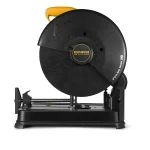
JUNFENG JF9308 Cut-off Saw
Price on request
Troubleshooting: first symptoms and likely causes
The first report on a failing cut-off saw is almost never the fault itself; it is a symptom wearing the wrong name badge. A cut-off saw complaint usually arrives dressed as a breakdown but walks like a setting; make it show its papers before anyone reaches for tools. Run a fresh wheel gently through the first cuts and let it find its bite; a wheel pushed hard before it opens up glazes flat and never recovers its full speed in the material.
Half of site faults on a cut-off saw are assembly and dirt; the other half are wear that announced itself early and was booked into a busy week instead. The cut-off saw looks after the crew that writes its little history down and lets the rest go from memory.
What the record actually says
Catalogue entry as listed: JUNFENG JF9308 Cut-off Saw (reference A0140004). The catalogue keeps it among the Electric Power Tools pages, with the price quoted per order by the desk. No measurement is recorded for it, and the text adds none.
Selection notes for the buyer
Selection questions about a cut-off saw answer best with the day’s real work on the table, not with catalogue superlatives. This is the steady body for fabrication corners where the same few profiles get cut all day; consistency beats peak power when every cut has to present a clean edge for welding.
Compare cut-off saw candidates on the axes the job actually loads: duty cycle, reach, weight in the hand and the price of keeping them fed. The cut-off saw does not ask to be admired, only noticed on schedule, and the schedule is the cheap part.
Buying, stocking and shelf policy
The buying rule for a cut-off saw that survives contact with sites: one in the work, one in the box, and the box labelled. Keep wheels in their box by grade and the saw on its rack; mixing grades in one tub means the soft wheel gets asked to do hard work, and the honest failure gets blamed on the saw.
Order cut-off saw consumables on a cadence rather than in a panic; the panic order always ships the slow way and arrives after the job has moved on. Give every cut-off saw on the shelf a label, a date and a place to live; unnamed stock is how duplicates breed and shortages surprise. Review cut-off saw stock against the jobs actually quoted for the month ahead; the diary is a better purchasing agent than any instinct is. The cut-off saw returns whatever is invested in it, and attention paid in small coins comes back as whole working days.
How tools of this class usually die
Ask any repair bench what kills a cut-off saw and the answer is a short list, told with more amusement than sympathy. The obituary of a cut-off saw is usually written months before the funeral, in small abuses that nobody logged at the time. A cut-off saw rarely dies of old age on a well-run site; it dies of a habit that somebody thought was a shortcut. Sparks fanning backward instead of forward mean the wheel has hardened against the material or the feed has gone lazy; check the wheel before you blame the operator. The habit costs nothing to keep and costs less than a single cut-off saw failure to learn on any site.
The fix-or-replace decision
Repair or replace is a weekly question for a cut-off saw, and it deserves arithmetic rather than sentiment. The wheel flange faces matter more than most crews admit; scored flanges keep throwing wheels out of true, and a file plus five minutes at the bench fixes what a new wheel cannot.
Weigh a cut-off saw repair in hours as well as money; a cheap part that takes the machine out for a week is not a cheap part. Log every cut-off saw repair with its date and its parts; the second entry on the same fault is usually the signature on the replacement order. Set a cut-off saw rule in advance, such as no more than one major repair per season; rules made in advance survive the pressure of the moment. A cut-off saw that quits during a check costs a pause; the same quit during a job costs a story, and nobody wants the story.
What we claim and what we do not
The catalogue record supplies every factual claim on this cut-off saw page, brand and reference and category alike; the rest is trade craft, clearly labelled as such. Two sources meet on this cut-off saw page: the catalogue entry for the facts, and ordinary workshop practice for the advice; neither pretends to be the other. Nothing on this cut-off saw page is invented; the factual half comes from the record, and the craft half is what any journeyman would tell you across the bench. A shelf note and a minute of attention to the cut-off saw now are worth more than a purchase order later.
Where the record for this cut-off saw is silent, the text is silent too; written specification for the listing is available from the desk on request. The cut-off saw does not ask to be admired, only noticed on schedule, and the schedule is the cheap part.
| Model | JF9308 |
|---|---|
| Type | Cut-off Saws |
Related products
Reviews
There are no reviews yet.