



LUTIAN DRGON-D4 Pressure Washer
Price on request
Reading a family designation with a suffix
The model DRGON-D4 carries a suffix beyond the family name, and the suffix usually marks a revision: a different pump, a different frame, a different accessory set. It is the manufacturer’s way of keeping a familiar name while changing what is inside. For a buyer, the practical rule is to treat the suffix as the real model and the family name as background.
That habit prevents a specific mistake: ordering accessories or spares against the family name and finding they do not fit. Hoses, lances and couplings are matched to the revision, not to the badge. Photograph the machine’s label before ordering anything, and quote the full designation including the suffix.
Frame, wheels and the ergonomics of moving water
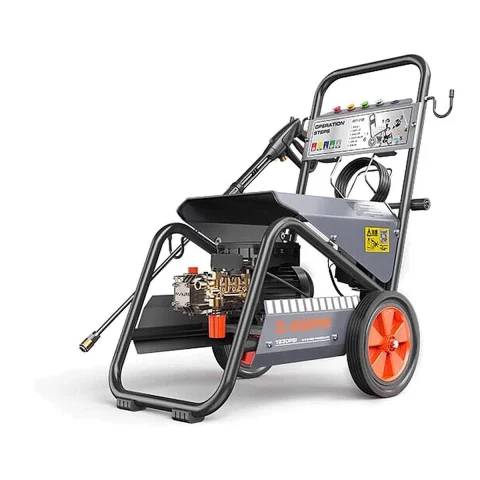
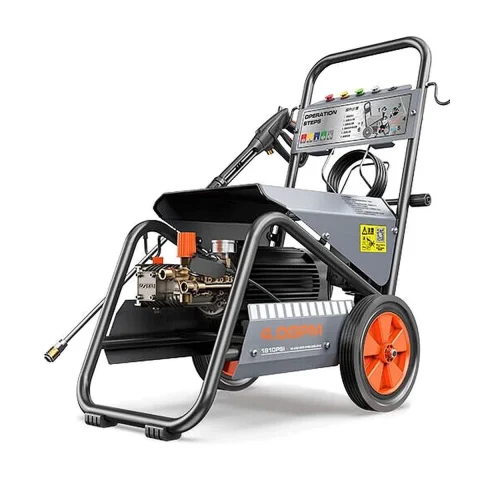
A pressure washer is heavy when full of water and awkward when empty, and the frame is what makes the difference between dragging and rolling. Large wheels roll over gravel and kerbs; small castors catch on every joint in a paved drive. If the machine will move between jobs, wheel diameter matters more than the catalogue photograph suggests.
Balance matters too. A unit that tips forward when pulled will fall on the lance connection, which is the weakest point on the whole assembly. Before buying, pull the machine backwards by its handle in the shop; if it tips, you will be picking it up for years.
The inlet side: filter, hose and cavitation
Cavitation is the sound of a pump being destroyed, and it almost always starts at the inlet. A filter half-blocked with grit, a hose that collapses under suction, or a tank connection with an air leak all produce the same result: the pump runs dry between slugs of water and the seals overheat. The noise is unmistakable once you have heard it, a rattling growl rather than a smooth hum.
Check the filter every few uses rather than every season. It is a two-minute job that prevents the failure most often reported as the pump giving up. Keep the supply hose as short and as wide as the inlet allows, and never run the machine from a mains tap that is shared with something drawing heavily.
Surface cleaners versus the lance
A rotary surface cleaner covers many times the area of a lance at the same pressure, with no streaks and no overspray, and it is the single accessory that changes how a hard-surface job feels. It also uses more water and needs a machine with enough flow to drive the rotation; on a low-flow unit the cleaner stalls and leaves marks instead of cleaning them.
The lance still wins for edges, drains, sills and anything vertical. Most owners end up with both and use the cleaner for the field and the lance for the perimeter. If you buy one accessory first, buy the cleaner, provided your machine has the flow to spin it.
Detergent injection and the parts that clog
Downstream injection is the common arrangement: a venturi pulls chemical into the flow after the pump, so the pump never sees it. That is deliberate, because many detergents are aggressive to pump seals. The venturi itself is a small orifice that clogs with undiluted chemical or dried residue, which is why the machine stops drawing soap and starts drawing air. Flush the injection line with clean water after every use, and store the pick-up filter out of the bucket.
Electrical safety outdoors, stated plainly
Water and mains electricity share a workspace in this job, and the protection is a residual current device, not caution alone. Use an RCD-protected supply, keep every connection out of standing water and off the ground, and never handle a plug with wet hands. A machine that trips an RCD is telling you it has an earth fault; it is not being temperamental. Keep the cable behind the machine rather than beside the lance, and uncoil extension leads fully, because a coiled drum derates badly under load.
Maintenance rhythm, and buying cold rather than hot
A short list beats a thorough one nobody follows. After each use: flush detergent, drain the pump, wipe the couplings. Monthly: clean the inlet filter, check the O-rings, inspect the hose for bulges. Seasonally: change the pump oil if the pump is serviceable and check the unloader for sticking. Log the dates somewhere visible, because the failure mode of maintenance is not doing it wrongly but forgetting it entirely.
Cold water plus detergent removes most soils found on vehicles, patios and facades. Hot water removes grease and oil faster and is the right answer for engine bays, commercial kitchens and heavy transport, at several times the cost and with fuel or a large electrical supply to provide. If grease is the routine problem, buy heat; if it is the occasional problem, buy cold and a good degreaser and rent heat for the occasions.
| Model | DRGON-D4 |
|---|---|
| Type | Pressure Washers |
Reviews
There are no reviews yet.