

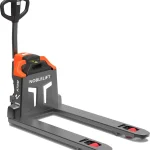

NOBLELIFT CPD30-A Forklift
Price on request
Rated capacity is a number with a distance attached
A forklift’s rated capacity is quoted at a load centre, usually 500 mm from the face of the forks. Move the load further out and the capacity falls, because the moment about the front axle rises. A machine rated at three tonnes is rated at three tonnes at that distance, and considerably less with the load at a metre.
That is why capacity plates carry a derating curve rather than a single figure. Buyers who compare machines by rated capacity alone are comparing figures measured under conditions their loads may not meet.
Load centre, mast and the height that reduces capacity
Capacity also falls with lift height, since a raised load shifts the centre of gravity and adds mast deflection. A machine that handles a load at floor level may not handle it at six metres, and the plate states the reduction for each mast stage.
Where the application involves stacking at height, the capacity at that height is the working figure. Buying on the floor-level rating and discovering the limit at racking height is a mistake that is expensive to correct.
Electric drive, battery and the shift arithmetic
An electric counterbalance machine runs from a traction battery, and the battery capacity determines how long it works between charges. The practical question is whether one battery covers a shift and whether a spare and a charger are needed for multi-shift operation.
Charging time matters as much as capacity. A battery that takes eight hours to charge and runs for six hours imposes a schedule constraint that a diesel machine does not, and the constraint belongs in the operating cost calculation rather than in the specification sheet.
What the registry carries for this model
The model CPD30-A and the SKU. Rated capacity, load centre, lift height, mast type, battery voltage and capacity, tyre type, turning radius and weight are not recorded in our data. The model string suggests a series designation and a size class, and we do not decode it into a specification.
For material handling equipment the missing figures are the ones that matter operationally: capacity at the working load centre, lift height, and the aisle width the machine needs. Those three decide whether a machine can work in a given warehouse at all.
Aisle width and the space a machine occupies
Turning radius and the geometry of the machine determine the minimum aisle in which it can turn. A machine that is right for outdoor yard work can be unusable in a narrow-aisle racking layout, and the limitation is geometric rather than a matter of power.
Measure the aisle before choosing the machine, and add clearance for the operator and for pallets that are not perfectly placed. The figure to ask for is the right-angle stacking aisle, which is the dimension that decides usability in a racked building.
Tyres, floor and the surface the machine works on
Pneumatic tyres suit rough or outdoor surfaces; solid and cushion tyres suit smooth indoor floors and give a tighter turning envelope. The choice affects both traction and floor loading, and a machine with the wrong tyres damages the floor it runs on.
Floor capacity is the other side of the same question. A loaded forklift concentrates weight on a small contact area, and an upper floor or a mezzanine needs a structural check before a machine is put on it, not after.
What to confirm before ordering
Rated capacity and the load centre at which it applies, capacity at the working lift height, maximum lift height, mast type, battery voltage and capacity, charger specification, tyre type, right-angle stacking aisle, turning radius and machine weight. Ask for the derating curve, not just the headline figure.
Tell us the load, the lift height, the aisle and the surface. Those four answers decide the machine, and three of them are measurements the buyer already has.
| Model | CPD30-A |
|---|---|
| Type | Forklifts |
Reviews
There are no reviews yet.