
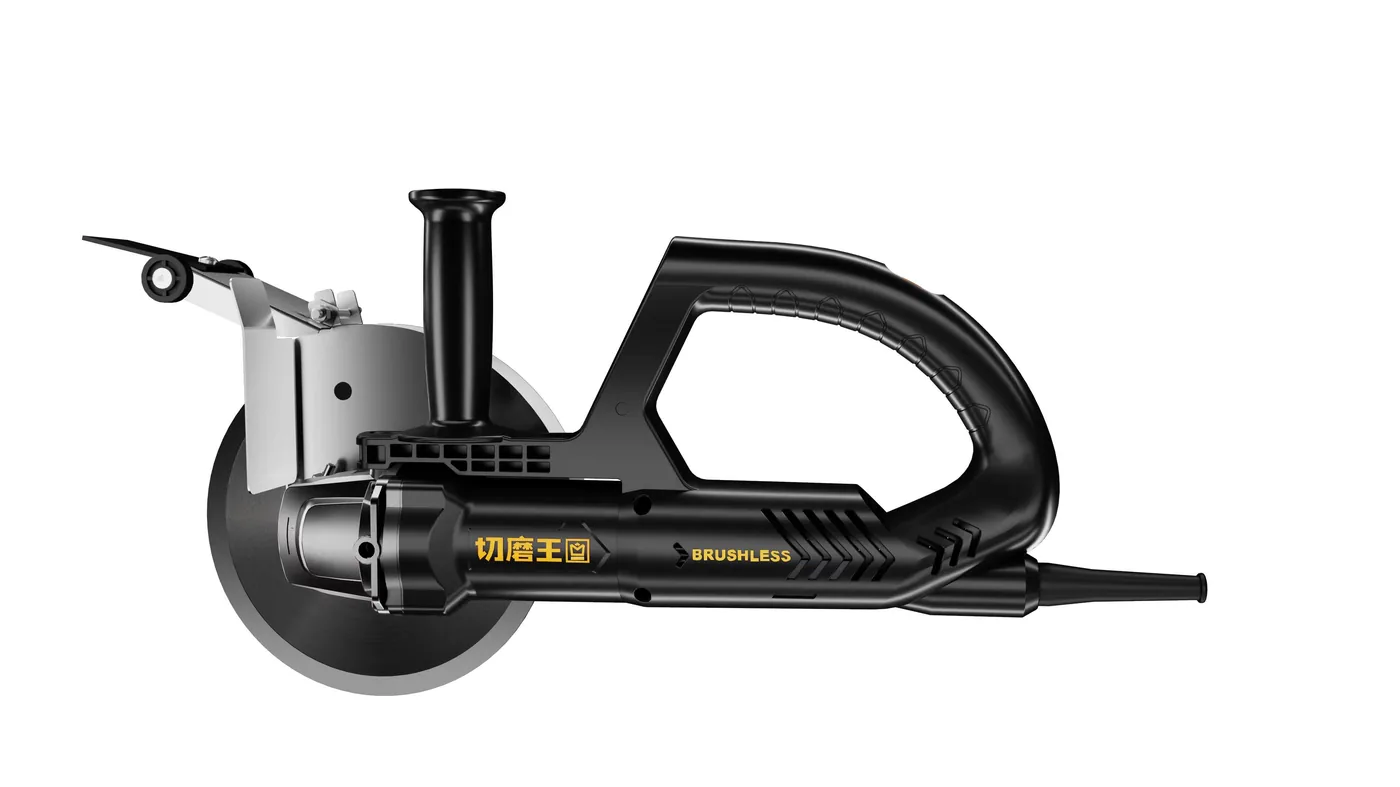

QIEMOWANG HLC1-190 Wall Chaser Brushless
$66.99
Troubleshooting: first symptoms and likely causes
Symptoms first and teardown last is the sequence that keeps a wall chaser out of the parts bin and its paperwork intact. A groove that wanders off the pencil line is usually one blade seated lower than its partner, not a worn pair.
Check the simple things in order on the wall chaser, power and dust and fasteners, and write down what was tried; a fault log turns guesswork into a service history. Rust on a wall chaser is a storage verdict long before it is a tool verdict.
The catalogue facts
Catalogue entry as listed: QIEMOWANG HLC1-190 Wall Chaser Brushless (reference S0070050012). It is filed under Wall Chasers in the book, and attaches the listed price of $66.99 to the offer. The record states no size, and this page states none.
Selection notes for the buyer
Between the wall chaser options a buyer actually has, the axes that decide are load, reach and the cost of feeding it. For the electrician chasing conduit runs in plaster and block where the dust has to end up in a box rather than the air.
A sensible wall chaser comparison weighs the tool against the diary rather than the brochure; the best spec on paper loses to the right size on the belt. Mark each wall chaser with a crew initial and usage drops through the floor.
Procurement notes for the buyer
Procurement planning for a wall chaser starts from the failures: stock the parts that stop jobs, not the parts that decorate shelves. Take the blades off before storage and blow the dust out of the depth stops, since compacted grit is what throws the cut out later.
Purchasing works best when the wall chaser, its consumables and its spares travel on the same order; three deliveries cost three waits, and one costs one. A wall chaser training refresher each quarter costs less than one warranty dispute.
How tools of this class usually die
Ask any repair bench what kills a wall chaser and the answer is a short list, told with more amusement than sympathy. The obituary of a wall chaser is usually written months before the funeral, in small abuses that nobody logged at the time. A wall chaser rarely dies of old age on a well-run site; it dies of a habit that somebody thought was a shortcut. Returns centre on a cut of uneven depth, which traces to a depth stop that has slipped on its thread. One page of wall chaser notes per week is enough to spot a failing batch early.
The fix-or-replace decision
Repair or replace is a weekly question for a wall chaser, and it deserves arithmetic rather than sentiment. Blades, the depth stops and the extraction collar are the wear points, and the collar is the one worth checking first.
Keep a borderline wall chaser alive on bench duty rather than on critical work; the second failure always arrives at the worst moment of the job. Site foremen who rotate two sets of wall chaser report fewer mid task stoppages overall.
How this page was written
Everything factual on this wall chaser page is drawn from the catalogue entry and the library record; the technique passages are standard trade craft, not specification. Half of wall chaser failures we see began as storage problems, not skill problems.
Anything the record does not state about this wall chaser, the page does not invent; a written specification can be requested from the desk. Mark each wall chaser with a crew initial and usage drops through the floor.
| Model | HLC1-190 |
|---|---|
| Type | Wall Chasers |
Related products
Reviews
There are no reviews yet.