
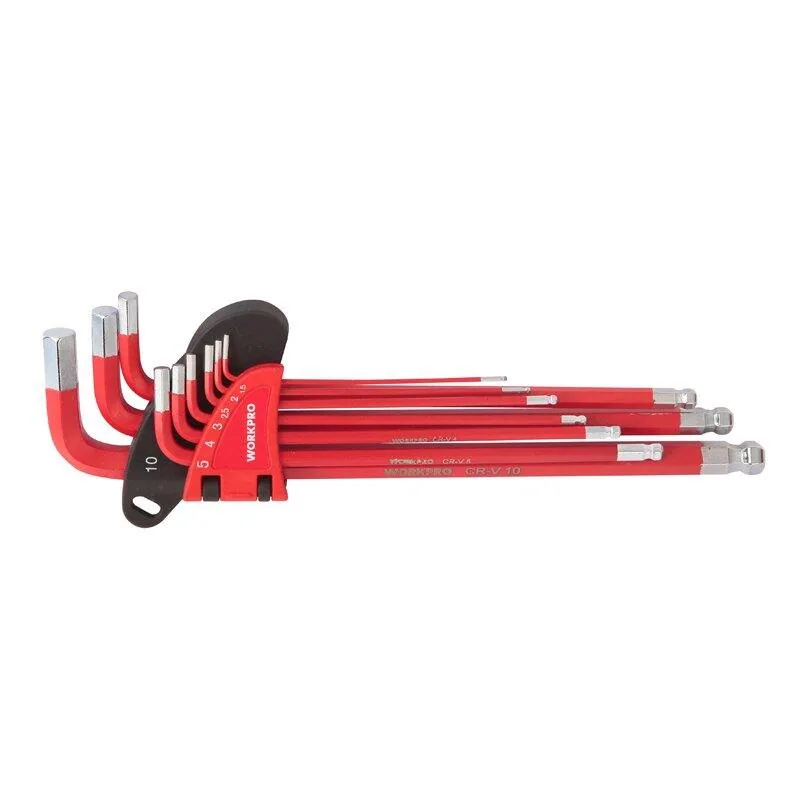
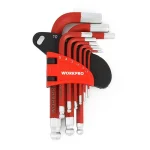
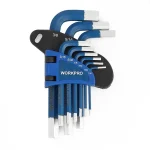
WORKPRO Hex Key 9pcs – WP222013
$8.99
Troubleshooting: first symptoms and likely causes
Troubleshooting a hex key begins with what changed, not with what broke; the last job tells you more than the manual does. A fastener that spins without biting usually has a rounded hex; stop early, the corners you save are the extraction you skip.
Diagnose from cheapest to dearest on a hex key: a clean, a setting and a consumable before any teardown; most returned faults live in the first three checks. None of this is clever, and a hex key that is treated this way repays it in years, not weeks. The hex key keeps no score by itself, but the bench log keeps it for the crews that bother. Habits like these cost minutes and save mornings, which is the best exchange rate a hex key will ever offer.
The catalogue facts
Catalogue entry as listed: WORKPRO Hex Key 9pcs (reference WP222013). The listing files under Hand Tools, and attaches the listed price of $8.99 to the offer. The record logs a 9pcs size line. No model designation is carried in the record, so the text names none.
How it compares for the work
Between the hex key options a buyer actually has, the axes that decide are load, reach and the cost of keeping them sharp. The balanced layout suits maintenance trolleys where reach and leverage trade off every shift.
When two hex key options both serve, choose the one whose consumables and spares the store already carries; familiarity is a feature no datasheet lists. The habit costs nothing to keep and costs less than a single hex key failure to learn on any site.
Procurement notes for the buyer
The buying rule for a hex key that survives contact with sites: one in the work, one in the box, and the box labelled. Issue replacements by the complete set only; singles from a mixed bin are how mismatches become routine.
A shelf policy that labels, dates and rotates hex key stock beats a larger budget; the cheapest tool is the one already on the shelf when the job calls. Keep the hex key routine boring and the tool stays boring too, which is the whole ambition here.
How tools of this class usually die
Ask any repair bench what kills a hex key and the answer is a short list, told with more amusement than sympathy. The obituary of a hex key is usually written months before the funeral, in small abuses that nobody logged at the time. A hex key rarely dies of old age on a well-run site; it dies of a habit that somebody thought was a shortcut. Hammering a key into a corroded hex flattens both; patience and penetrating oil do the work the blow cannot. None of this is clever, and a hex key that is treated this way repays it in years, not weeks. The hex key keeps no score by itself, but the bench log keeps it for the crews that bother. Habits like these cost minutes and save mornings, which is the best exchange rate a hex key will ever offer.
Repair, replace or retire
Repair or replace is a weekly question for a hex key, and it deserves arithmetic rather than sentiment. Keep one virgin key per case as the wear gauge; comparing against new beats arguing about feel.
Retire a hex key that fails in ways that endanger rather than inconvenience; a tool that fails safe can wait for parts, and one that fails loud cannot. Boring is the standard for a hex key on this bench; drama always arrives later as an invoice.
What we claim and what we do not
The facts here are the catalogue facts for one hex key; the advice is ordinary craft of the trade, written so new hands stop learning it from broken parts. A shelf note and a minute of attention to the hex key now are worth more than a purchase order later.
This page claims no figure for the hex key that the record does not carry; specifications in writing are available from the desk. The habit costs nothing to keep and costs less than a single hex key failure to learn on any site.
| Model | WP222013 |
|---|---|
| Type | Hex Keys |
| Size | 9pcs |
Reviews
There are no reviews yet.