
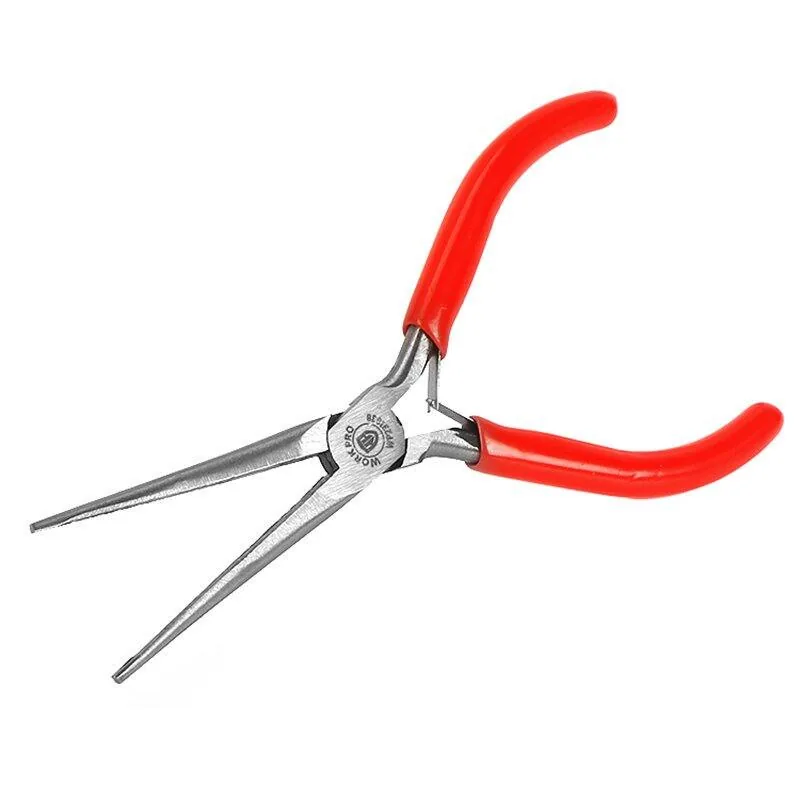
WORKPRO Pliers Mini – WP231038
$1.99
What a mini plier is for, and what it is not
A mini plier earns its place in a tool kit by doing the work that a full-size pair cannot reach: terminals in a crowded enclosure, wire in a deep box, a split pin behind a panel. Its value is access, not force, and the most common way one gets ruined is being asked to do something a full-size tool should have done.
Once that division of labour is clear, a small pair becomes one of the most-used items in a bag. Confused about it, it becomes the tool that gets its jaws twisted open and is then declared badly made.
Jaw alignment is the first thing to check
Close the jaws and hold them up to the light. The cutting edges should meet along their length with no gap at either end, and the tips should not cross. A pair whose tips cross has been dropped or forced, and it will mark whatever it grips and cut nothing cleanly.
Open and close the joint slowly and feel for grit. A joint with play will let the jaws shift under load, which is how a nut gets rounded and a wire gets nicked instead of cut.
Cutting edges and what they can take
A small pair of pliers is designed for soft wire, cable ties and small terminals. It is not designed for hardened piano wire, and the notch that appears in the edge after one attempt is permanent. Look at the edge under a light: a clean edge reflects evenly, a damaged one shows bright spots where metal has been chipped away.
Cut near the pivot rather than at the tips. The force available at the tips is a fraction of the force at the base of the jaw, and most edge damage happens because the operator cut at the point of least leverage and then squeezed harder.
Grip and handles
Check that the handle sleeves are secure and free of splits. A loose sleeve rotates under load, which turns a controlled cut into a slip, and a slip with a small sharp tool near a live terminal is not a minor event. If the handles are insulated, inspect the insulation at the point where it meets the metal. That boundary is where insulation fails first, and it is also where the hand sits.
Keeping a small tool small
Do not use a mini plier as a hammer, a lever, or a spanner. Each of those uses takes the joint out of alignment, and a joint that is out of alignment cannot be corrected by tightening the pivot, because the pivot is not what bent. Wipe the tool after use and put a drop of oil on the joint occasionally. Rust in a small joint is more serious than in a large one, since there is far less material to lose before the jaws stop meeting.
Buying a spare rather than a replacement
Small tools go missing more often than they wear out. Buying two at the outset costs less than buying one replacement in a hurry, and it means the first one can be retired the moment its edge is damaged rather than being kept in service because there is nothing else.
Keep the spare in its packaging. An unprotected mini plier in the bottom of a bag arrives at its first job with its edges already marked by whatever else was in there.
Acceptance checks
Close the jaws, check the edge line and the tip alignment, work the joint through its full travel, and confirm the handles do not flex torsionally when the jaws are squeezed hard. Then cut a piece of the wire you normally use and look at the end: a clean cut with no burr means the edges are sound.
Finally, check the return spring if the tool has one. A spring that has lost its tension is a nuisance rather than a fault, but it is the first sign that the tool has been stored open and compressed for a long time.
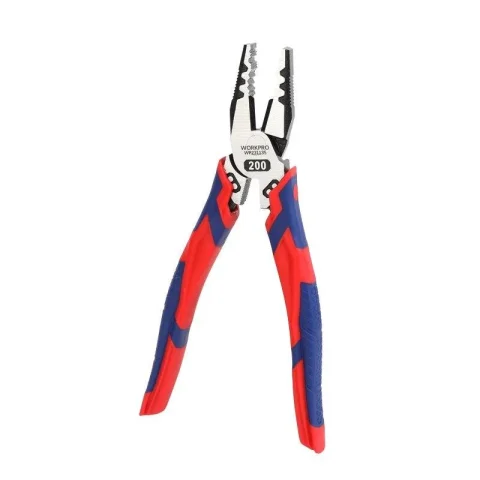
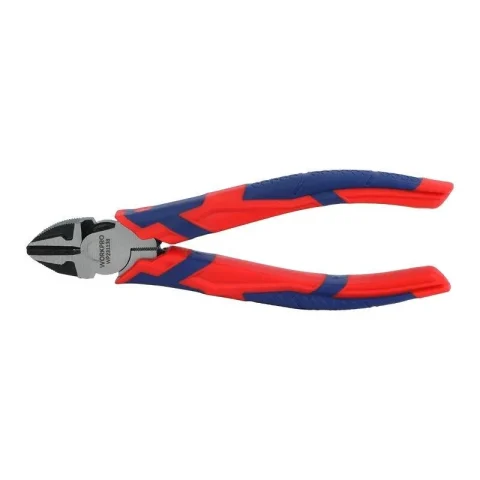
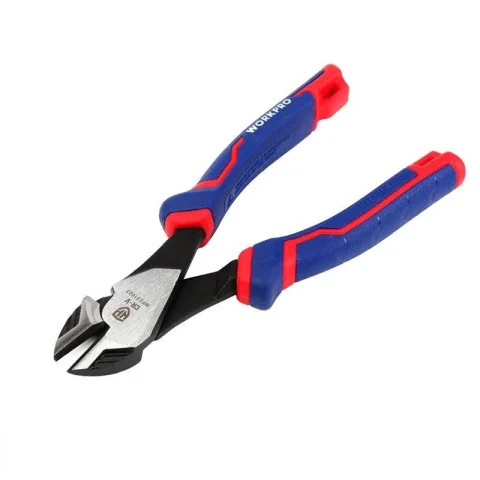
| Model | WP231038 |
|---|---|
| Size | 145 mm |
| Type | Mini needle nose pliers |
| Material | Drop forged steel |
Reviews
There are no reviews yet.