



WORX WU328 Rotary Hammer
Price on request
Overview
The chisel mode on a rotary hammer is the reason many buyers choose one over a drill. With the rotation switched off, the tool becomes a small breaker that will lift tiles, chase a channel for conduit, break out a mortar bed or remove a plaster skim without the dust and noise of a cutting disc. It is slower than a grinder for a long chase and far less damaging to the surrounding material.
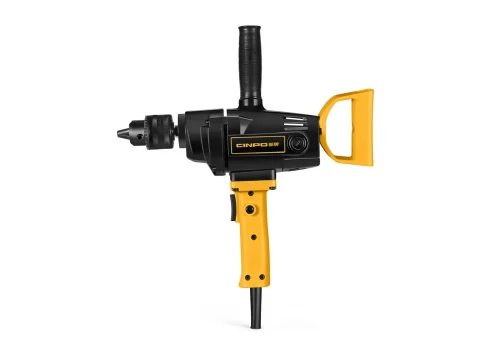
Catalogue entry as listed: WORX WU328 Rotary Hammer (reference WU328). Chuck system, impact energy and the modes offered are not carried in the record, so they are confirmation items, and the notes below describe chiselling work with this class of tool.
Materials and construction
A chisel for this tool is a solid steel bar with a formed cutting edge and a shank that matches the chuck. The two common forms are the flat chisel, which breaks and lifts, and the point, which starts a hole or splits a crack. A wide flat chisel spreads the blow over a larger area and is gentler on the material; a narrow one concentrates it and removes material faster with more damage around the edge.
Because there is no rotation, the shank does not need drive splines: the blows pass through the shank and the tool indexes the chisel to one of a set number of positions. On most machines a collar allows the chisel to be rotated by hand to a working angle and then locked, and a chisel that will not index is a chisel that will be used at the wrong angle and will bend.
How to select the right size and variant
Decide whether the work is lifting or removing. Lifting tiles and removing a screed need a wide flat chisel worked under the edge at a shallow angle; chasing a conduit slot needs a narrow chisel and a steady hand, or a dedicated chasing attachment where one is available. Breaking out a doorway needs a point to start and a flat to widen.
Then consider the tool’s control. A chisel mode that allows the bit to be indexed means the operator can work with the tool in a comfortable posture rather than fighting the angle. Weight matters here more than in drilling: chiselling is done with the tool held at a working angle for long periods, and a heavier tool does more work per blow but tires the operator faster.
Typical applications
Removing tiles and adhesive from a wall or floor. Chasing channels for conduit and pipe in plaster and block. Breaking out a mortar bed under a threshold. Removing a damaged section of screed before a repair. Light demolition around a lintel or an opening, where a breaker would be too much and a club hammer too little.
Standards and acceptance checks
Check that the chisel locks positively and cannot be pulled out by hand, and that it indexes through its positions without binding. Run the tool in chisel mode against a scrap block and listen for a clean blow rather than a rattle; a rattle suggests a worn shank or a dry hammer chamber. Check the cutting edge for a rolled burr, which is what a chisel does before it cracks at the shank.
Chiselling generates a great deal of dust and a great deal of noise, and the dust from mortar and plaster is fine enough to stay airborne. Extraction at the tool or a dampened surface keeps it down, and a mask rated for fine particulate is the minimum. Eye protection is essential because chips travel, hearing protection is required at this noise level, and the tool should never be started with the chisel against the surface or with the chisel pointing at anybody. Before starting, confirm what is behind the material: a chase that cuts through a cable is the most common serious injury in this work.
Packing, quantity and shipping
Tools ship with a side handle, a depth gauge and a case or carton, usually without chisels. Chisels are heavy and are shipped separately in individual sleeves, because a loose chisel in a carton will damage both itself and the case. Confirm what the carton contains, since photographs often show the tool with bits and chisels that are not part of the item.
What to confirm before ordering
Confirm the chuck system and whether chisels of that shank pattern are readily available, the modes offered and whether the chisel can be indexed, and the impact energy figure. Confirm the weight and the vibration figures at the handles. Confirm the chisel forms available, the side handle, the case, the manual language, and the carton content.
| Model | WU328 |
|---|---|
| Type | Rotary Hammers |
Related products
Reviews
There are no reviews yet.