
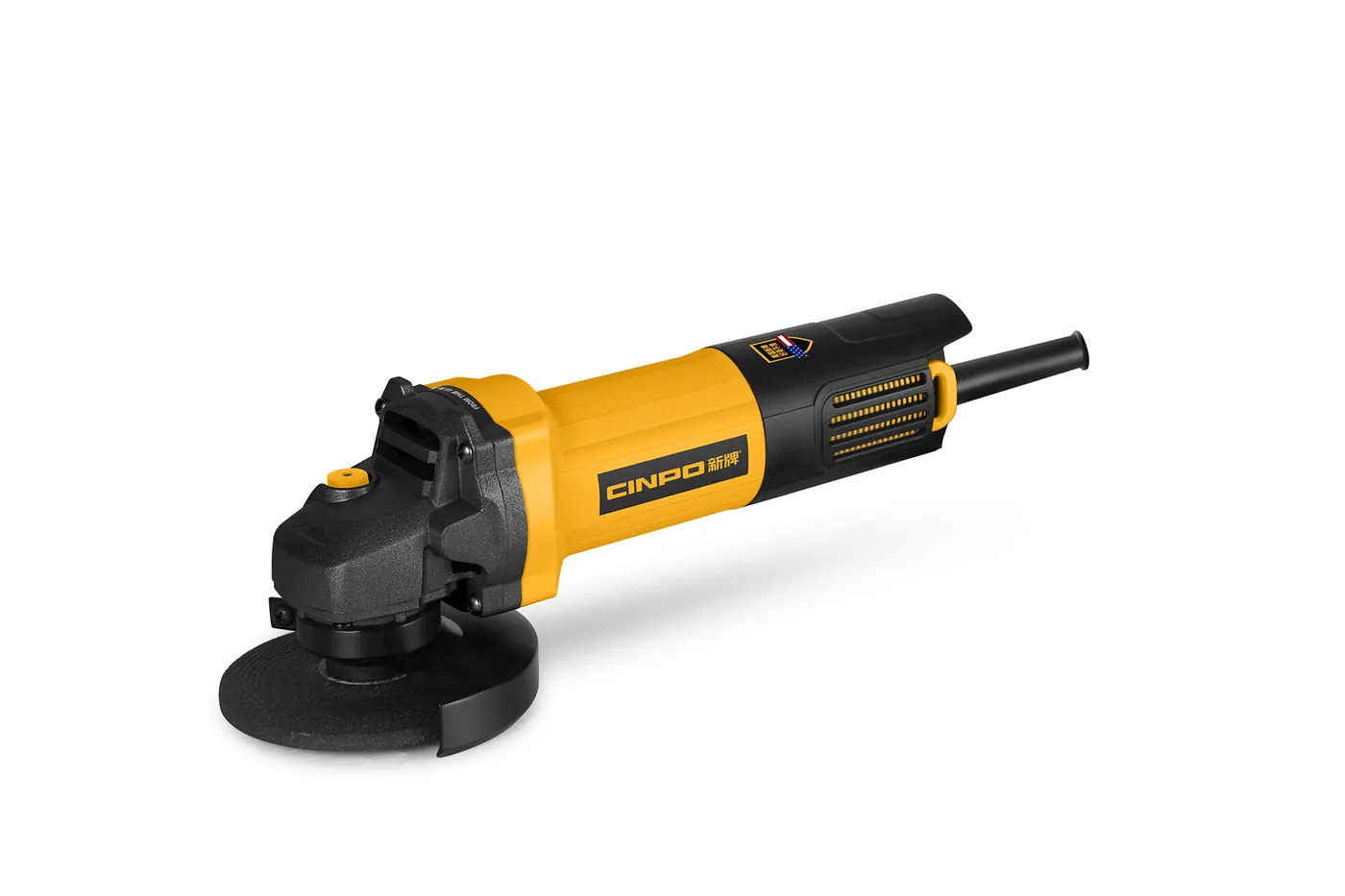
CINPO 1030 Angle Grinder
$17.99
The number on the body and the number on the label
On many grinders the model is a range code rather than a serial, so the machine you receive will carry the designation 1030 plus a rating plate that lists the electrical details. The plate is the authoritative document. Read it before connecting the tool, because it tells you the supply it expects and the duty it is rated for.
That plate also settles arguments about whether the tool can run from an extension lead. A long thin lead drops voltage under load, the motor draws more current to compensate, and it runs hot and slow. Use the shortest heavy-gauge lead that reaches, uncoil it fully, and keep it out of the cut path.
Changing a disc without losing a finger
Unplug the tool before touching the spindle. That sentence is in every manual and skipped in every workshop, and it is the reason disc-change injuries happen. The spindle lock is a pin that engages the shaft; press it only when the spindle is stationary, and never use it to stop a spinning disc.
The pin spanner engages the holes in the outer flange. If the nut will not move, the spindle lock is not seated rather than the nut being impossibly tight. Forcing it shears the lock pin, which is a small part with a long lead time and no substitute.
Guard adjustment and the angle you actually need
The guard rotates so its closed section sits between the operator and the wheel. For cutting, the open side faces the direction of travel; for grinding, the closed side faces the operator’s body. Adjust it before starting, not after, and check that the clamp screw bites on the collar rather than on paint.
A guard that rattles is a guard that will move mid-cut. If the clamp no longer holds, the guard is worn and should be replaced rather than shimmed. It is one of the few parts where a bodge has a direct line to an injury.
Cutting straight without forcing
A grinder cuts straight when the disc is allowed to cut. Pressure does not speed the cut; it loads the disc, heats the workpiece and encourages the wheel to wander. Mark the line, start the cut at the edge, and let the weight of the tool do the work while you keep the disc in plane.
For long cuts, score the line first with a light pass and then deepen it. The groove guides the disc and prevents the drift that comes from trying to hold a line by eye. On thin sheet, clamp a straight edge and run the guard against it rather than the disc.
Sparks, clothing and the workspace
Sparks travel further than people expect and find openings in clothing, particularly at the cuff and the collar. Natural fibres smoulder and synthetics melt, so the worst clothing choice is a lightweight synthetic shirt. Leather boots, long trousers and no loose cuffs are the baseline.
Clear the bench of sawdust, solvent and paper before cutting metal. A spark that lands on a rag is harmless; the same spark in a pile of sawdust can smoulder for an hour before it becomes a fire after you have left the room. The fire risk outlasts the job, which is what makes it easy to forget.
What vibration tells you about the assembly
A grinder that vibrates more than it used to is telling you something specific. A disc mounted off-centre, a flange with a burr, or a backing pad that has absorbed moisture all produce vibration that the hands feel before the eyes see. Stop, dismount, inspect, remount.
Is this the right capacity for the work
The right grinder is the lightest one that will do the largest job you actually have. A larger machine cuts faster and is heavier, and weight is what tires the operator over a session. If the heaviest task is trimming tile and cutting rebar, a mid-range body is enough.
| Model | 1030 |
|---|---|
| Type | Angle Grinders |
Related products
Reviews
There are no reviews yet.