
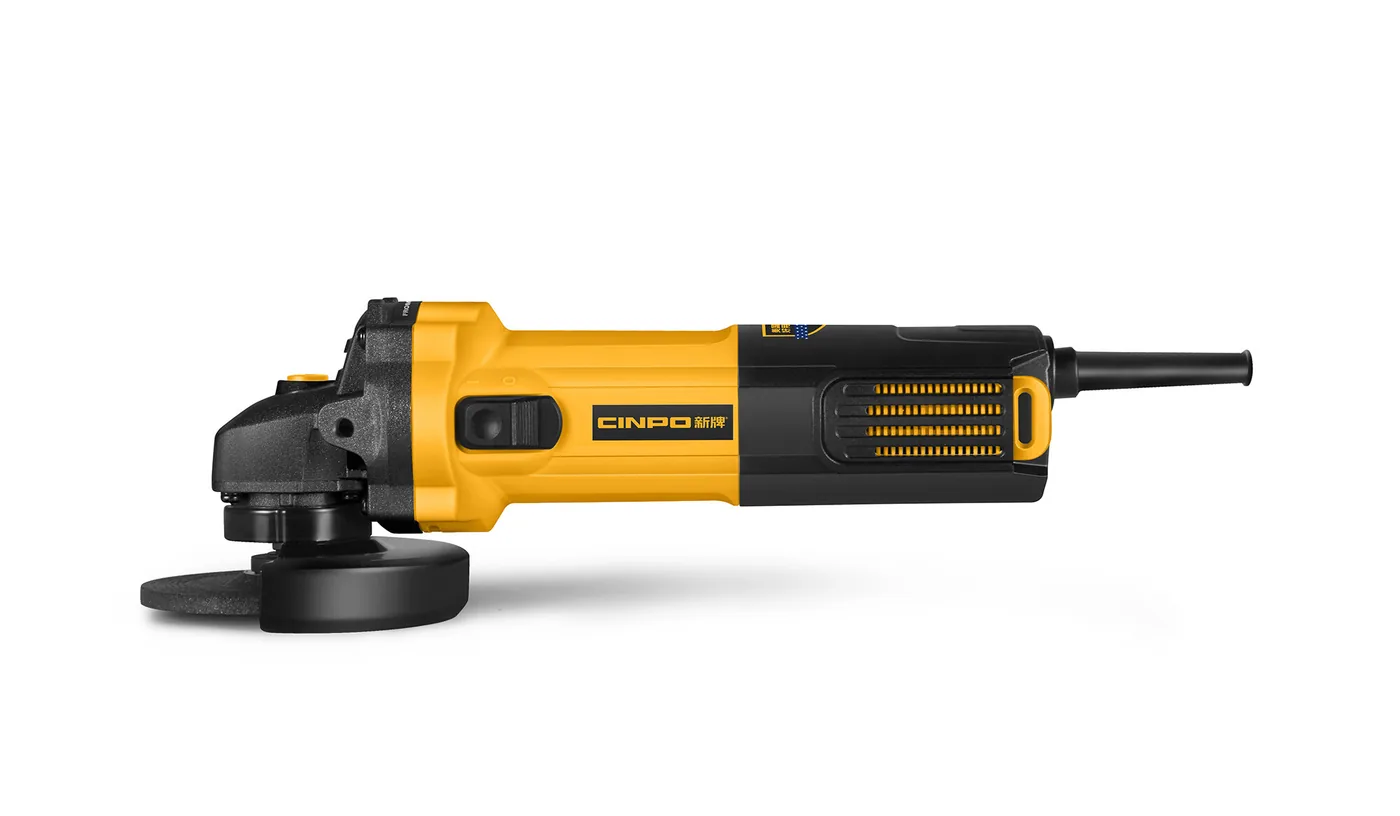
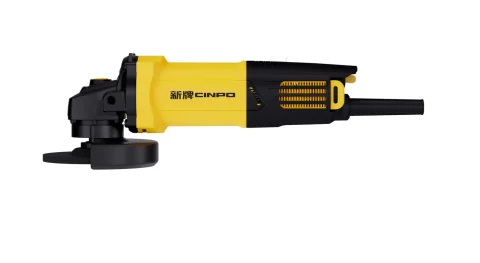
CINPO 1031 Angle Grinder
$17.99
One digit apart, and what that usually changes
Adjacent designations in a grinder range, 1030 and 1031 for example, typically indicate a variant rather than a different machine class: a different switch, a different guard, a different supplied accessory. The model 1031 should be read as a sibling of its neighbour, and the useful question is what the variant changes in use.
Practical buyers compare the two by looking at the box contents and the switch. If the only difference is a handle or a spanner, the decision is about price. If the switch type differs, the decision is about safety in the positions you actually work in.
Choosing the disc by material, not by habit
Most people buy one kind of disc and use it for everything, which is why discs fail early and cuts come out rough. Bonded abrasives are formulated for specific materials: one for steel, another for stainless, another for stone. Using a steel disc on stainless can contaminate the cut face and cause corrosion that appears weeks later.
The practical answer is a small stock rather than a single type. One cutting disc for steel, one for stone, a flap disc for finishing and a wire cup for cleaning. That set covers almost every job a general workshop meets and costs less than a single power tool accessory bundle.
Thin discs and the pressure problem
Thin cutting discs are efficient because they remove less material, and fragile for the same reason. They tolerate the cut but not the twist. Side pressure, even modest, cracks them from the rim inwards, and the crack propagates the moment the disc heats.
If a thin disc keeps breaking, the cause is almost always technique: standing off the line, correcting with the wrist, or forcing the last part of the cut. Support the workpiece so the cut does not close on the disc, and let the tool finish at its own rate.
Clamping, support and the cut that closes
A cut in flat sheet closes as it progresses if the material is not supported, pinching the disc and producing kickback. Support both sides of the cut with blocks or sawhorses so the kerf stays open. This single precaution removes the most common cause of violent kickback in sheet metal work.
For tube and profile, the same logic applies in three dimensions: the section relaxes as it is cut and can grip the blade. Rotate the work and cut in stages rather than trying to complete the section in one pass.
Dust extraction on stone and tile
Cutting tile and stone produces fine silica dust that stays airborne long after the cut. Water suppression or extraction at the guard is the only effective control. A mask worn over a beard or a loose fit is close to useless, and a workshop swept afterwards simply moves the dust back into the air.
Work outside when possible, keep the extraction nozzle close to the cut rather than at arm’s length, and clean up with a wet method rather than a brush. These are dull instructions that decide whether the job is a one-off exposure or a chronic one.
Bearing noise and the early warning
Grinders announce bearing failure with a rumble that appears under load before it appears at idle. Run the tool briefly after each session and listen. A rumble that was not there last week is the cheapest diagnostic you will ever get, and it usually precedes a repair that is still economic.
When the guard has to come off, and when it does not
There are narrow jobs where a standard guard physically cannot enter the space, and the trade answer is usually a different tool rather than a removed guard. A die grinder or a reciprocating saw reaches those places without exposing an unguarded wheel at working speed.
| Model | 1031 |
|---|---|
| Type | Angle Grinders |
Related products
Reviews
There are no reviews yet.