
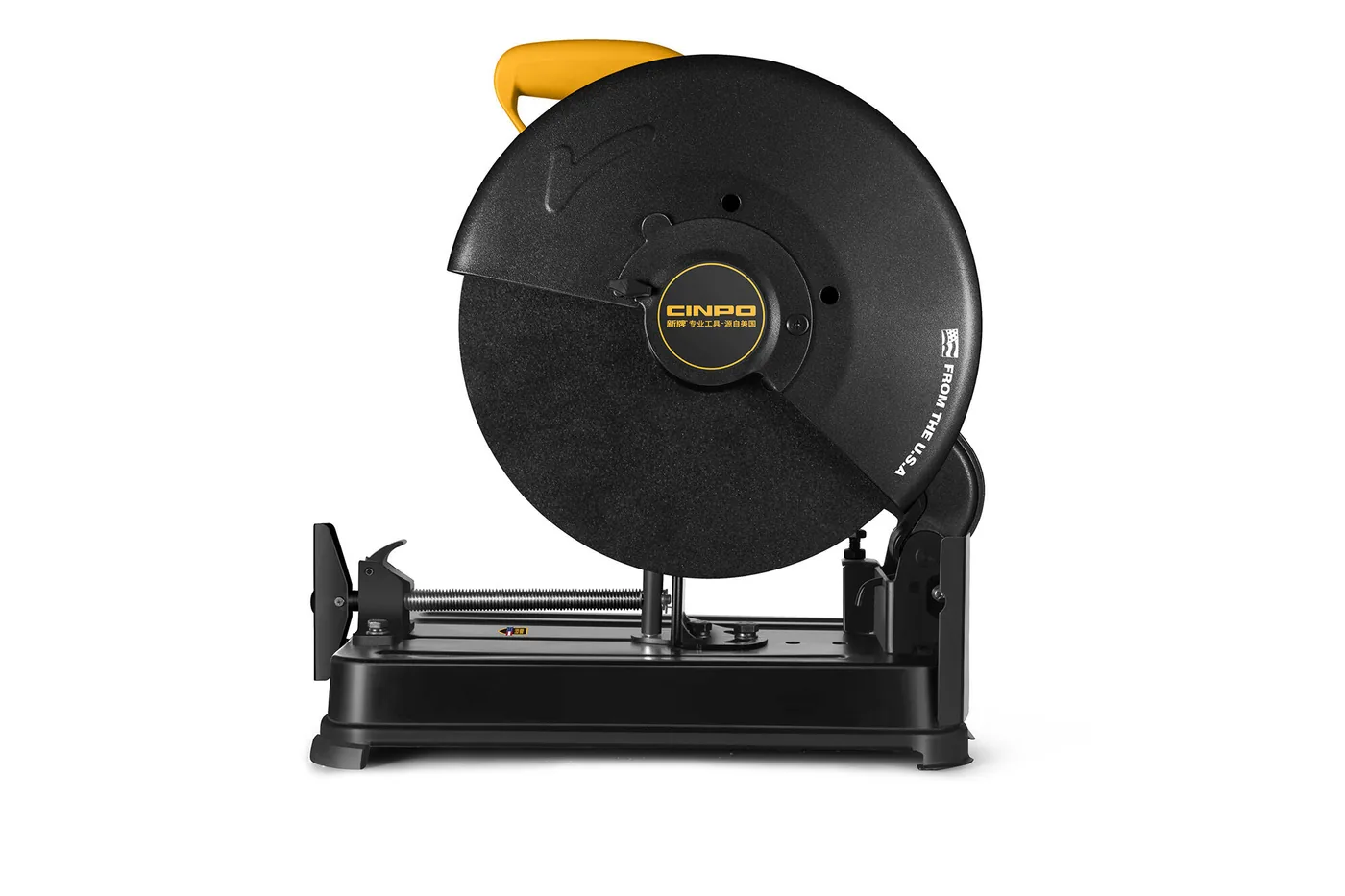

CINPO 30355 Cut-off Saw
$65.99
Field symptoms and where they come from
The first report on a failing cut-off saw is almost never the fault itself; it is a symptom wearing the wrong name badge. A cut-off saw complaint usually arrives dressed as a breakdown but walks like a setting; make it show its papers before anyone reaches for tools. A cut-off saw that trips its supply wants leads and socket checked before the machine; heavy faults start at connections.
Start every cut-off saw investigation with the cheapest question, is it clean, and end with the dearest one, is it worn; the answer usually lives at the cheap end. Work a cut-off saw fault from the plug inward: supply, fasteners, filters, then settings, and only then the internals nobody wants to open on a live job. Give a cut-off saw fault the witness treatment, who ran it, on what, for how long; the story behind the symptom removes half the possible causes by itself. None of this is clever, and a cut-off saw that is treated this way repays it in years, not weeks. The cut-off saw keeps no score by itself, but the bench log keeps it for the crews that bother. Habits like these cost minutes and save mornings, which is the best exchange rate a cut-off saw will ever offer.
What the record actually says
Catalogue entry as listed: CINPO 30355 Cut-off Saw (reference S0070010087). The listing files under Electric Power Tools, and attaches the listed price of $65.99 to the offer. No size line appears in the record, so the text invents none.
How it compares for the work
Comparing cut-off saw options honestly starts with the jobs they will actually see this quarter, not with the ones they could theoretically do. The right cut-off saw for a crew shows up in the work diary long before it shows up in a datasheet; read the diary first and shop second. Among the cut-off saw choices open to a buyer, the differences that matter repeat daily, and the differences that impress appear once a year at best. For fabrication yards with fixed supply it covers the daily cutting bench without fuss or drama.
When two cut-off saw options both serve, choose the one whose consumables and spares the store already carries; familiarity is a feature no datasheet lists. The habit costs nothing to keep and costs less than a single cut-off saw failure to learn on any site.
Buying, stocking and shelf policy
Procurement planning for a cut-off saw starts from the failures: stock the parts that stop jobs, not the parts that decorate shelves. Keep spare plates and the changing key on one shelf ticket; an immovable bolt at changeover ends the shift.
Buy cut-off saw capacity against the work actually scheduled rather than the work imagined; stock that turns is an asset, and stock that waits is a price tag. Keep the cut-off saw routine boring and the tool stays boring too, which is the whole ambition here.
Field failures we keep seeing
Ask any repair bench what kills a cut-off saw and the answer is a short list, told with more amusement than sympathy. The obituary of a cut-off saw is usually written months before the funeral, in small abuses that nobody logged at the time. A cut-off saw rarely dies of old age on a well-run site; it dies of a habit that somebody thought was a shortcut. Dragging the cable through swarf and water finds the insulation early; an overhead run outlives any floor route. None of this is clever, and a cut-off saw that is treated this way repays it in years, not weeks. The cut-off saw keeps no score by itself, but the bench log keeps it for the crews that bother. Habits like these cost minutes and save mornings, which is the best exchange rate a cut-off saw will ever offer.
Repair, replace or retire
A cut-off saw repair decision made at the bench with numbers beats one made at the van with feelings, every week of the year. The honest question about a tired cut-off saw is not can it be fixed but should it be, and the parts list answers it faster than optimism does. Every cut-off saw reaches the crossroads where the next repair costs more than the tool; the crews that spot the crossing keep their budgets. Switchgear and leads are the service items; a machine that hesitates at start wants electrical attention, not force.
Weigh a cut-off saw repair in hours as well as money; a cheap part that takes the machine out for a week is not a cheap part. Log every cut-off saw repair with its date and its parts; the second entry on the same fault is usually the signature on the replacement order. Set a cut-off saw rule in advance, such as no more than one major repair per season; rules made in advance survive the pressure of the moment. Boring is the standard for a cut-off saw on this bench; drama always arrives later as an invoice.
Our description policy
The catalogue record supplies every factual claim on this cut-off saw page, brand and reference and category alike; the rest is trade craft, clearly labelled as such. Two sources meet on this cut-off saw page: the catalogue entry for the facts, and ordinary workshop practice for the advice; neither pretends to be the other. Nothing on this cut-off saw page is invented; the factual half comes from the record, and the craft half is what any journeyman would tell you across the bench. A shelf note and a minute of attention to the cut-off saw now are worth more than a purchase order later.
This page claims no figure for the cut-off saw that the record does not carry; specifications in writing are available from the desk. The habit costs nothing to keep and costs less than a single cut-off saw failure to learn on any site.
| Model | 30355 |
|---|---|
| Type | Cut-off Saws |
Related products
Reviews
There are no reviews yet.