
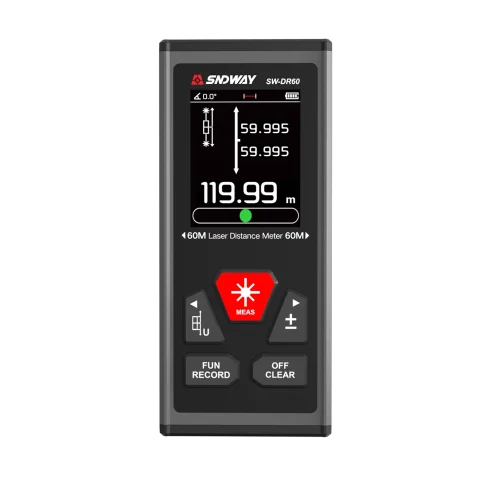
Kress KI200 Laser Distance Meter
Price on request
Overview
A laser distance meter measures a span from one end instead of two. The tape that needs a helper at the far wall, sags in the middle and reads long over a long run, is replaced by a narrow beam that returns from a flat surface in a fraction of a second. For anyone who prices work by the square metre, that difference decides whether an estimate survives contact with the site.
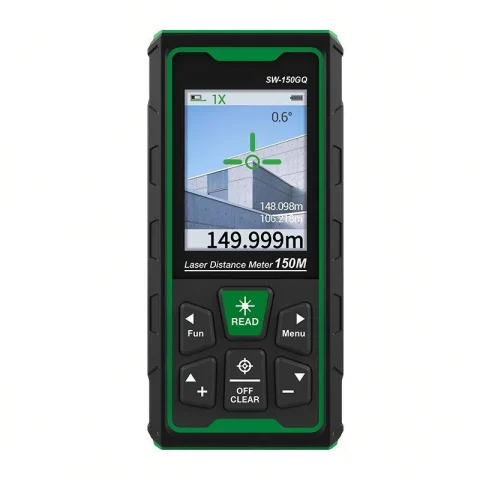
Catalogue entry as listed: Kress KI200 Laser Distance Meter (reference KI200). The buying record carries the model reference, so the notes below describe the class of hand-held meters and leave range, tolerance and battery format to the confirmation list at the end of the page.
Materials and construction
Housings in this class are usually glass-filled nylon or ABS with a rubber overmould at the corners, because the tool lives in a pocket and gets dropped onto concrete. The optical window is a separate moulded part, often recessed a millimetre or two so that a scuff on the shell does not reach the lens. Inside, the emitter and receiver sit on a short optical bench that has to stay aligned after a knock; that is the real durability question, not the outer shell.
The keypad is a sealed membrane with metal-dome switches underneath, and the battery door carries a gasket on units intended for outdoor work. A thread insert on the base, normally a quarter-inch, lets the unit sit on a tripod when the target is out of reach or above head height.
How to select the right size and variant
Selection starts with the longest run the tool will be asked to measure, since a unit rated well beyond that distance is still working inside its most reliable band. The second figure is the tolerance the job can absorb: setting out studs and pricing flooring accept a wider spread than fitting shopfront glazing or measuring for bespoke cabinetry. Third is the reference the reading is taken from, whether rear edge, front edge or a folding spike for corners, because the wrong datum shifts every figure on the list by the length of the housing.
After that the differences are practical. A backlit display matters in ceiling voids and plant rooms. Memory for the last few readings saves writing numbers on the back of a hand. An inclinometer turns the same unit into a level for raking trim or a pitched roof.
Typical applications
Estimators walk a floor and build an area figure room by room without a helper. Heating and ventilation crews measure duct runs and riser heights where a tape cannot be hooked. Electricians check conduit runs and cable pulls through ceiling voids against the drawing. Cabinet fitters work wall to wall for a countertop template. Facilities staff measure rooms for space planning without moving furniture.
Standards and acceptance checks
Three checks settle a delivery. First, repeatability: measure the same five-metre span ten times against a wall and confirm the readings cluster; a unit that drifts will not hold tolerance on site. Second, datum check: switch between rear, front and spike reference and confirm the offset matches the housing length stated in the manual. Third, optics: aim at a matt target at an angle and confirm the reading holds, then at glass or polished steel, where a meter without a suitable target should drop out rather than return a wrong figure.
The beam sits in the visible class that carries a warning label. It must not be pointed at eyes, at reflective surfaces near face height, or at passing traffic, and cells should be removed for long storage.
Packing, quantity and shipping
Retail units usually ship in a printed carton with a pouch, a wrist strap and a pair of cells. Bulk orders ship in plain inner boxes, and the cell chemistry decides how the carton travels: lithium cells carry transport paperwork that alkaline cells do not, so battery format is a shipping question as much as a product one. Ask for the inner-box count before quoting a retail programme.
What to confirm before ordering
Confirm the range class and the tolerance you will accept, the datum options and whether a spike is included, and the battery format with cells fitted or packed separately. Confirm the default unit and whether it can be locked, the backlight, and the language of the printed manual. Confirm the pouch or case, the tripod thread, and the carton marking required by the buyer.
| Model | KI200 |
|---|---|
| Type | Laser Distance Meters |
Reviews
There are no reviews yet.