
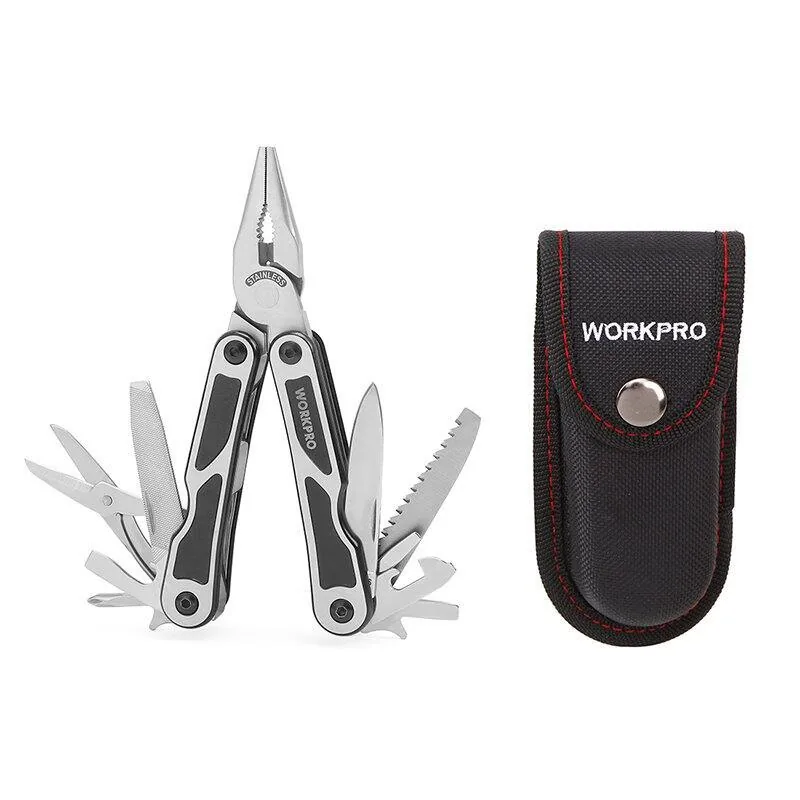
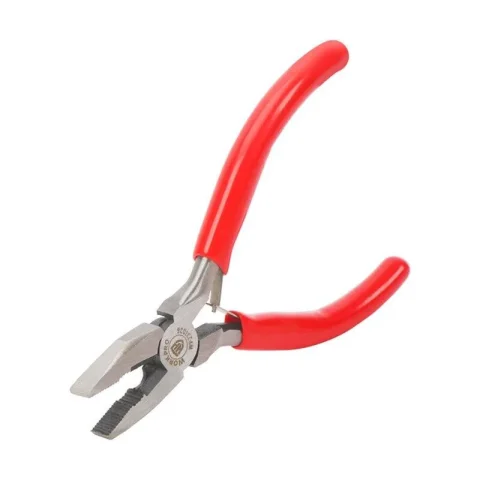
WORKPRO Pliers – WP382009
$9.99
Choosing a plier by the job, not by the picture
Pliers all look like pliers in a catalogue, and they are not interchangeable. A combination plier grips, bends and cuts; a long-nose reaches; a diagonal cutter cuts flush. Buying the wrong one is not a matter of quality but of geometry, and no amount of care will make a long-nose cut a cable tie flush.
Decide the dominant task before choosing. If the tool will mostly cut, buy a cutter. If it will mostly hold, buy something with a serrated jaw and a joint that will not flex. The compromise tool is the one you buy second.
The joint is the whole tool
A plier is two levers around a pivot, and everything about its feel and its accuracy comes from that pivot. A riveted joint that develops play lets the jaws shear sideways under load, which rounds nuts and turns a clean cut into a pinch. A machined joint with an adjustable fastener can be taken up; a riveted joint cannot.
Open and close the tool slowly and feel for grit or a tight spot. Both indicate that the joint has been contaminated or damaged, and neither improves with oil alone.
Jaw patterns and what they grip
Serrated jaws hold round and flat material well and mark soft material badly. Smooth jaws hold less but leave a finish that can be sold. For anything visible, smooth jaws and a piece of shim stock will protect the surface far better than a careful hand on a serrated jaw.
Check that the jaw tips meet before the heel does. If the heel closes first, the tips never grip, and the tool will slip on thin material exactly when the operator is applying most force.
Cutting edges and leverage
Cut at the base of the jaw, where the leverage is greatest, and keep the wire perpendicular to the edge. Cutting at the tips or at an angle is how edges get notched, and a notch turns every subsequent cut into a pinch that leaves a burr. Look along the edge under a light after a week of use. Bright spots are chips, and a chipped edge cannot be restored by sharpening without removing enough material to change the jaw’s geometry.
Corrosion is the slow failure
Pliers live in bags, on benches and occasionally in the rain. A drop of oil on the joint and a wipe of the jaws after use is enough to keep a sound tool sound for years. Left wet, the joint seizes long before the jaws wear out. Do not store pliers with the jaws closed tight against a spring. A tool kept compressed takes a set in its spring and loses the light opening action that makes it pleasant to use.
Handles, insulation and hand size
Check that the grips are secure and that the insulation, where present, extends past the point where the hand sits. A grip that slides is a control problem, not a comfort one, and it shows up as slips under load.
Handle length should suit the hand that will use it. A tool that is too large for its operator is held at the tips of the fingers, which reduces both control and force, and the resulting slips are usually blamed on the tool.
Acceptance and first use
Work the joint through its full travel, check that the tips meet, and cut a piece of the material you intend to cut. A clean cut with no burr and no mark from the edge indicates a sound tool; a pinch or a burr indicates an edge that has been damaged in transit or finished badly.
Then put it to work with the right task. Most pliers that fail early were asked, on their first day, to do something a different tool should have done.
| Model | WP382009 |
|---|---|
| Type | 15-in-1 multi-purpose pliers |
| Material | Stainless steel |
| Length | 150 mm |
Related products
Reviews
There are no reviews yet.