
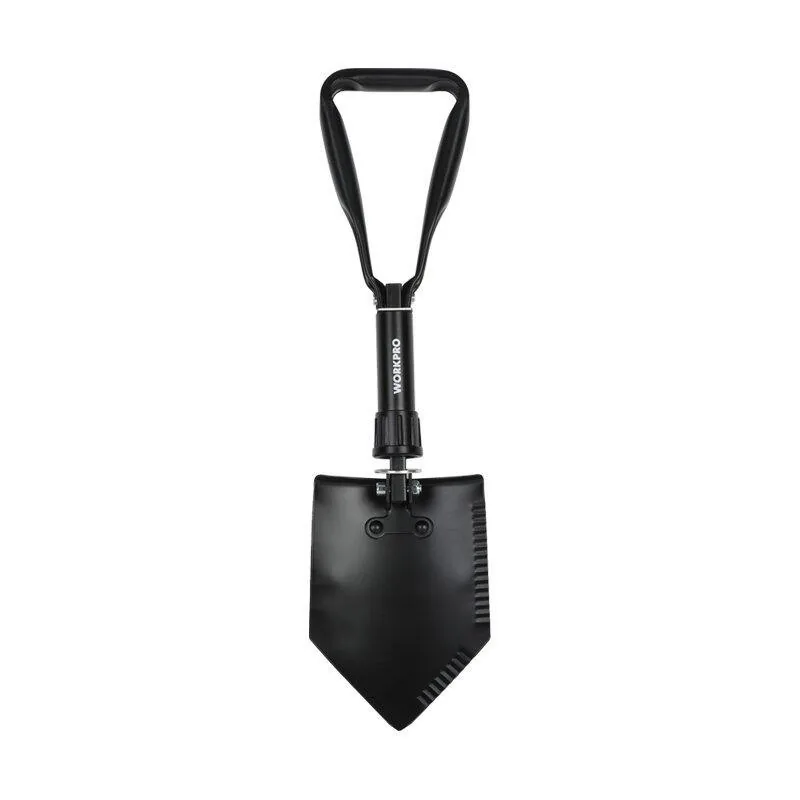
WORKPRO Shovel
$8.99
Troubleshooting: first symptoms and likely causes
The first report on a failing shovel is almost never the fault itself; it is a symptom wearing the wrong name badge. A shovel complaint usually arrives dressed as a breakdown but walks like a setting; make it show its papers before anyone reaches for tools. A shovel that bites poorly is dull or bent beyond its line; a file on the lip fixes the first and a straight-edge check decides the second.
Start every shovel investigation with the cheapest question, is it clean, and end with the dearest one, is it worn; the answer usually lives at the cheap end. Work a shovel fault from the outside inward: grip, edge, joint, then the parts nobody wants to disturb on a live job. Give a shovel fault the witness treatment, who ran it, on what, for how long; the story behind the symptom removes half the possible causes by itself. None of this is clever, and a shovel that is treated this way repays it in years, not weeks. The shovel keeps no score by itself, but the bench log keeps it for the crews that bother. Habits like these cost minutes and save mornings, which is the best exchange rate a shovel will ever offer.
The entry on the books
Catalogue entry as listed: WORKPRO Shovel (reference WP335006). The brand line reads WORKPRO; the listing files under Hand Tools, and carries a listed price of $8.99. No model designation is carried in the record, so the text names none. No size line appears in the record, so the text invents none.
Selection notes for the buyer
Between the shovel options a buyer actually has, the axes that decide are load, reach and the cost of keeping them sharp. For site cleanup, mixing and trench widening it earns its spot; fine shaping work belongs to narrower blades and more patience.
Compare shovel candidates on the axes the job actually loads: reach, grip, edge life and the price of keeping them sharp. The habit costs nothing to keep and costs less than a single shovel failure to learn on any site.
Procurement notes for the buyer
Procurement planning for a shovel starts from the failures: stock the parts that stop jobs, not the parts that decorate shelves. One per crew plus one per vehicle; shovels are the tool everyone needs at the same moment, usually the moment of rain.
A shelf policy that labels, dates and rotates shovel stock beats a larger budget; the cheapest tool is the one already on the shelf when the job calls. Keep the shovel routine boring and the tool stays boring too, which is the whole ambition here.
Field failures we keep seeing
Every trade has its list of self-inflicted failures, and the shovel list is short and predictable. Leaving it edge-down in wet concrete ends the blade’s working life by the next morning; clean and hang, every time. None of this is clever, and a shovel that is treated this way repays it in years, not weeks. The shovel keeps no score by itself, but the bench log keeps it for the crews that bother. Habits like these cost minutes and save mornings, which is the best exchange rate a shovel will ever offer.
The fix-or-replace decision
A shovel repair decision made at the bench with numbers beats one made at the van with feelings, every week of the year. The honest question about a tired shovel is not can it be fixed but should it be, and the parts list answers it faster than optimism does. Every shovel reaches the crossroads where the next repair costs more than the tool; the crews that spot the crossing keep their budgets. A cracked handle at the collar is the common failure; a handle replacement is a half-hour job and worth it at this class of tool.
Weigh the repair of the shovel in hours as well as money; a spare that takes the tool off the van for a week is not a cheap spare. Log every shovel repair with its date and its parts; the second entry on the same fault is usually the signature on the replacement order. Set a shovel rule in advance, such as no more than one major repair per season; rules made in advance survive the pressure of the moment. Boring is the standard for a shovel on this bench; drama always arrives later as an invoice.
Our description policy
The facts here are the catalogue facts for one shovel; the advice is ordinary craft of the trade, written so new hands stop learning it from broken parts. A shelf note and a minute of attention to the shovel now are worth more than a purchase order later.
Where the record for this shovel is silent, the text is silent too; written specification for the listing is available from the desk on request. The habit costs nothing to keep and costs less than a single shovel failure to learn on any site.
| Model | WP335006 |
|---|---|
| Type | Collapsible steel shovel |
| Material | High-carbon steel |
| Weight | 0.98 kg |
| Length | 570 mm |
| Width | 147 mm |
Related products
Reviews
There are no reviews yet.