
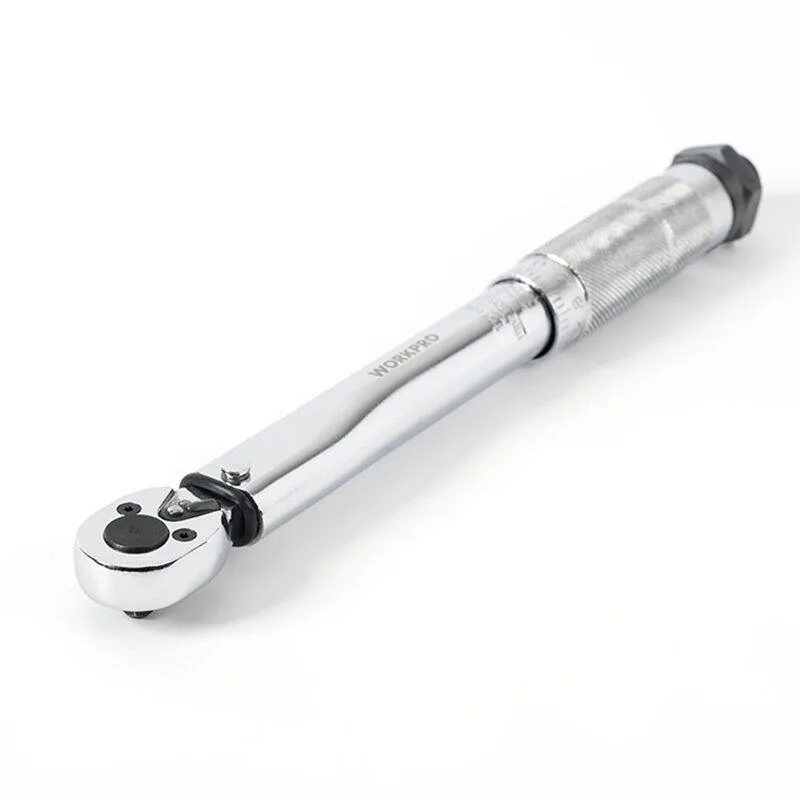
WORKPRO Wrench 6.3mm – WP271015
$18.99
Field symptoms and where they come from
Troubleshooting a wrench begins with what changed, not with what broke; the last job tells you more than the manual does. A small wrench that rounds a nut usually has jaws opened by use, not a nut that was always soft.
Diagnose from cheapest to dearest on a wrench: a clean, a setting and a consumable before any teardown; most returned faults live in the first three checks. A wrench checklist taped inside the lid gets used; one in a binder does not.
The catalogue facts
Catalogue entry as listed: WORKPRO Wrench 6.3mm (reference WP271015). The book files it with the Wrenches lines, and prices the listing at $18.99. The record logs a 6.3mm size line. No model designation is on file, and the page does not supply one.
Choosing between the alternatives
Comparing wrench options honestly starts with the jobs they will actually see this quarter, not with the ones they could theoretically do. The right wrench for a crew shows up in the work diary long before it shows up in a datasheet; read the diary first and shop second. Among the wrench choices open to a buyer, the differences that matter repeat daily, and the differences that impress appear once a year at best. For bench work where the fasteners are small and the swing of the handle has to stay short.
Put two wrench candidates side by side and ask what each costs on its worst day, not its best; the worst day is the one that decides the purchase. Judge wrench options by their second year, when consumables, spares and operator habits have all priced themselves in; year one lies to everyone. A wrench comparison that ignores the store room is incomplete; the option the store can actually support is the option that keeps working in March. The wrench manual’s torque and duty tables exist because someone already paid for them.
Buying, stocking and shelf policy
On stocking a wrench, the honest rule is small numbers of the right thing rather than shelves of hope. Wipe it and hang it on the rail, because a wrench kept loose in a bag has its jaws knocked out of parallel.
Order wrench consumables on a cadence rather than in a panic; the panic order always ships the slow way and arrives after the job has moved on. Give every wrench on the shelf a label, a date and a place to live; unnamed stock is how duplicates breed and shortages surprise. Review wrench stock against the jobs actually quoted for the month ahead; the diary is a better purchasing agent than any instinct is. Weekly wrench roundups take ten minutes and quietly retire half the surprise failures.
How tools of this class usually die
Ask any repair bench what kills a wrench and the answer is a short list, told with more amusement than sympathy. The obituary of a wrench is usually written months before the funeral, in small abuses that nobody logged at the time. A wrench rarely dies of old age on a well-run site; it dies of a habit that somebody thought was a shortcut. The complaint is a jaw that no longer sits square on the flats, which is wear rather than a bad batch. Damp storage shortens the working life of the wrench more than hard use ever does.
The fix-or-replace decision
Serviceability questions about a wrench end better when asked early, before the second failure books itself. There is nothing to service beyond the jaws, so a wrench that slips is a wrench to replace.
Retire a wrench that fails in ways that endanger rather than inconvenience; a tool that fails safe can wait for parts, and one that fails loud cannot. Every wrench on the bench should have a last checked date written somewhere visible.
Our description policy
Everything factual on this wrench page is drawn from the catalogue entry and the library record; the technique passages are standard trade craft, not specification. Half of wrench failures we see began as storage problems, not skill problems.
Silence in the record means silence on the page; for a written specification of this wrench, ask the desk and it will be sent over. This wrench page stretches nothing and fills nothing; what the record does not carry, the desk will provide in writing when asked. Every gap in the wrench record stays a gap here; the desk holds the written specification and sends it to anyone who asks for it. The wrench manual’s torque and duty tables exist because someone already paid for them.
| Model | WP271015 |
|---|---|
| Type | Wrenches |
| Size | 6.3 mm |
Related products
Reviews
There are no reviews yet.